

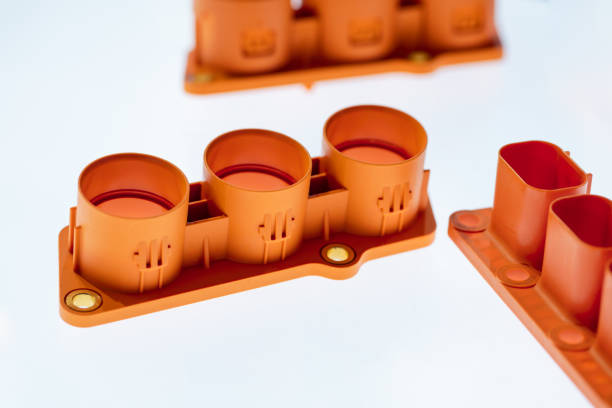
Designing a portable pet bowl requires a perfect balance of flexibility and durability. Manufacturers often choose between Liquid Silicone Rubber (LSR) and High Consistency Rubber (HTV). However, the specific requirements of a folding structure demand a very precise manufacturing approach. Specifically, the moulding process you select determines the life and quality of the final product. This guide compares LSR and HTV to help you make the right engineering choice. Discover why liquid technology is the superior solution for high-quality collapsible designs.
1. Material Viscosity: The Secret to Complex Shapes
The flow behavior of silicone determines how well it fills a complex mold.
The LSR Advantage in Thin Walls
Liquid Silicone Rubber features a very low viscosity. Consequently, it flows effortlessly into the most intricate and narrow parts of a mold. Furthermore, this high fluidity allows for ultra-thin sections, sometimes as thin as 0.5mm. This is essential for the “hinge” areas of a collapsible bowl. Therefore, LSR provides the precision needed for a smooth and easy folding action.
The HTV Limitation
Solid silicone (HTV) has a much higher, gum-like consistency. Consequently, it requires immense pressure to force the material into thin cavities. Furthermore, this high viscosity often results in incomplete filling for delicate folding structures. It works much better for thick-walled, simple geometric shapes like solid gaskets. Therefore, HTV struggles to meet the demands of modern portable pet gear.
2. Precision and Finish: Why LSR Leads the Market
High-volume production requires a clean process that minimizes manual labor.
Flash-Free Injection Moulding
LSR utilizes advanced injection moulding machines with closed-loop control. Consequently, the material stays perfectly contained within the mold cavity during curing. Furthermore, this precision eliminates “flash” or excess waste material on the edges. You receive a clean, professional finish directly from the machine. Therefore, you save significant time and money on post-processing and manual trimming.
HTV and Manual Trimming
Compression molding for HTV often leaves a thick seam around the part. Consequently, workers must manually cut away the excess silicone after each cycle. Furthermore, this manual step increases the risk of human error and inconsistent quality. It also raises the overall production cost per unit for complex designs. Therefore, LSR remains the more efficient choice for high-precision commercial products.
3. Performance Comparison for Folding Structures
| Feature | Liquid Silicone (LSR) | Solid Silicone (HTV) |
| Min. Wall Thickness | 0.5mm – 0.8mm | > 1.5mm |
| Flow Property | High (Liquid) | Low (Paste) |
| Folding Durability | Excellent (High Resilience) | Moderate (Prone to Tearing) |
| Automation Level | Fully Automatic | Semi-Automatic / Manual |
Consequently, LSR offers a much longer service life for products that fold repeatedly. Furthermore, the material maintains its original shape and “snap” after thousands of uses. Therefore, it is the industry standard for premium, durable pet accessories.
Conclusion: Choosing the Right Foundation for Success
The success of a collapsible product depends on the material’s ability to move.
Stop compromising your design with thick, bulky walls that are difficult to fold. Instead, embrace the precision and flexibility of professional LSR moulding. Consequently, your pet bowls will be lighter, stronger, and much more attractive to consumers. Experience the difference that advanced liquid silicone technology brings to your brand. Start your journey toward high-performance pet products with the right engineering today.



Add comment