


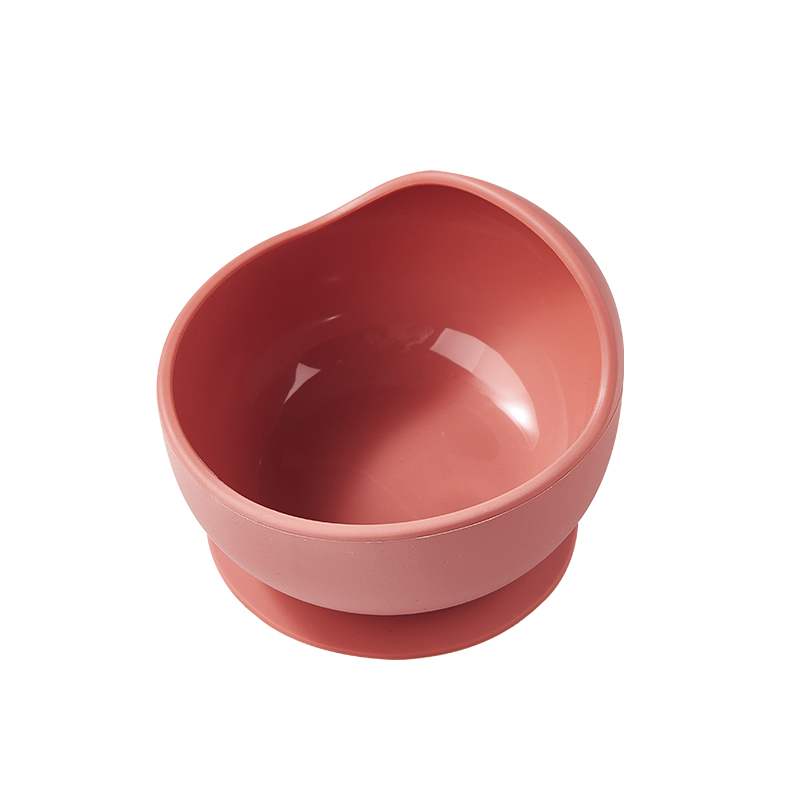
 B2B procurement managers, pet product brand owners, and product design engineers frequently face a frustrating product quality issue when launching silicone feeding systems. Despite utilizing premium, food-grade raw materials, final production samples often fail basic stability tests, meaning the silicone pet bowls get easily flipped or dislodged by active animals. When a product line suffers from weak tabletop adhesion, consumers quickly abandon the brand, resulting in low product reviews and high return rates.
To solve this issue permanently, you must address the core mechanical design and tooling parameters directly inside the manufacturing facility. Specifically, maximizing suction performance relies entirely on precise silicone injection molding techniques and strict tool profiling. This industrial technical guide details the physics of vacuum adhesion and outlines the critical injection molding parameters required to manufacture high-yield, non-slip silicone suction bowls.
1. Decoding the Physics of Vacuum Adhesion in Suction Bases
To engineer a flawless, unmovable feeding product, a design team must first understand how the suction base interacts with external surfaces.
 User Downward Pressure ──> Expels Under-Base Air ──> Creates Negative Vacuum Cavity
 Ambient Atmospheric Pressure ──> Presses Down Outer Shield ──> ♻️ Locked Non-Slip Adhesion
Suction bases do not rely on chemical adhesives to stay in place; instead, they operate entirely on the mechanical principle of negative vacuum pressure. When a user presses the suction base down onto a smooth surface, the downward force expels the trapped air from the internal cavity.
Consequently, a low-pressure vacuum zone forms underneath the center of the bowl. The higher ambient atmospheric pressure then forces the outer perimeter firmly against the tabletop, meaning the bowl can attach securely to flat surfaces and resist lateral sliding forces. If your manufacturing process allows even a microscopic gap along the outer lip, ambient air leaks back inside instantly, causing the vacuum cavity to fail and the bowl to flip over.
2. Critical Injection Molding Variables: Controlling the Adhesion Equation
Eliminating air leaks and maximizing vacuum retention requires tight, highly repeatable control over your silicone injection molding process. Four engineering factors directly determine your final suction yields:
                  Tooling & Molding Control Profile:
 ┌──────────────────────────────────────────────────────────────────────┐
 │ Hardness Control: Standardize on Shore A 40-60 to balance flex.     │
 ├──────────────────────────────────────────────────────────────────────┤
 │ Edging Profiling: Program a gradual taper down to thin, sealing lips.│
 └──────────────────────────────────────────────────────────────────────┘
-
Silicone Durometer (Hardness): Selecting the correct material hardness is a delicate balancing act. If you choose an ultra-soft silicone compound, the base lacks the structural integrity to hold its shape under load. Conversely, if you inject an overly stiff compound, the material cannot flex enough to seal against minor surface imperfections. Therefore, custom molders typically utilize liquid silicone rubber (LSR) rated between Shore A 40 and 60 to achieve ideal flexibility.
-
Suction Lip Thickness Profiles: The outermost edge of the sealing base—the lip—serves as the primary barrier against air leaks. Your mold tooling must create a gradual, tapered thin-wall structure along this outer edge. This smooth taper allows the silicone lip to mold seamlessly against surfaces, blocking outside air channels completely.
-
Base Curvature and Deflection Arc: The molded arc of the internal chamber determines how much air gets pushed out during a standard press. Engineers must optimize this internal curvature to match the exact compression depth of the product. An incorrect curvature leaves pocketed air bubbles behind, which sharply reduces the final holding strength.
-
Tooling Face Cleanliness and Parting Line Precision: Any micro-texture, oil residue, or flashing along the sealing lip disrupts the vacuum seal. Tooling technicians must keep the mold surfaces immaculately clean and strictly limit the use of external mold-release sprays. Additionally, placing the mold parting lines away from the sealing edge prevents flashing defects that could let air bleed inside.
3. Mastering LSR Molding to Secure High Production Reliability
Transitioning your product line to automated liquid silicone rubber (LSR) injection setups dramatically improves product consistency compared to older compression molding methods.
 Old Compression Runs ──> High Flash Tolerances & Trapped Air ──> ❌ Weak, Inconsistent Suction
 Automated LSR Molding ──> Precise Micro-Gate Shot Tracking     ──> ♻️ Flawless Vacuum Performance
Standard compression molding often yields uneven wall thicknesses and trapped micro-air bubbles inside the silicone body, creating weak points along the sealing lip. Conversely, automated silicone injection molding platforms inject mixed liquid components under high, tightly monitored pressures into heated mold cavities.
This precise shot delivery ensures the silicone material fills the thin-walled lip sections perfectly without creating air pockets or structural voids. By maintaining uniform material density across the entire base, your factory-finished bowls deliver strong, predictable suction power that keeps pets from flipping over their food.
Suction Performance Tooling Matrix
| Engineering Variable | Poor Quality Production Profile | High-Efficiency Injection Profile |
| Material Hardness Choice | Overly stiff or soft compounds disrupt the seal | Optimized Shore A 40-60 LSR formulation |
| Edge Wall Geometry | Chunky, uniform edge walls allow air leaks | Gradual, tapered thin-wall sealing lip |
| Mold Release Management | Heavy spray use leaves oily residue on parts | Zero-spray operation via mirror-polished tools |
| Internal Cavity Curvature | Flat profiles trap large pockets of ambient air | Deep, mathematically optimized compression arc |
| Parting Line Placement | Line runs across lip, creating flashing burrs | Hidden parting line away from sealing surfaces |
Conclusion: Optimize Your Sourcing and Tooling Strategy
In conclusion, delivering an unmovable, highly reliable consumer feeding product requires utilizing specialized production steps that optimize the physical properties of the suction base.
Stop risking your brand reputation and product margins on basic compression-molded bowls that lose suction and frustrate your target customers. Upgrading your custom product designs with silicone injection molding techniques guarantees absolute sealing integrity and flawless field reliability. We design every single core cavity block and liquid feeding valve to maintain pristine dimensional stability across high-volume production runs. Contact our industrial engineering department today to review your suction base CAD designs and secure a high-performance production quote.




Add comment