

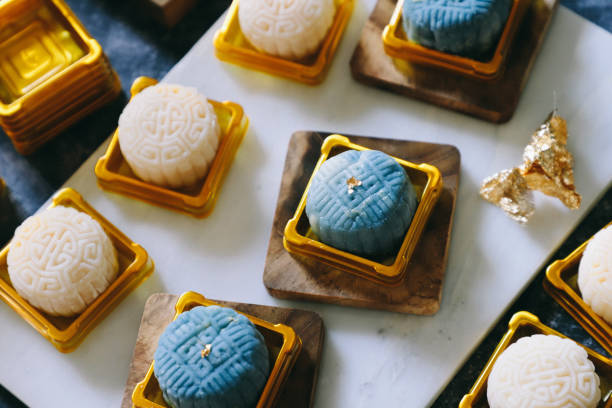
Snowskin mooncakes have become increasingly popular in premium bakery and confectionery markets due to their elegant appearance, soft texture, and chilled storage requirements. However, food brands and packaging suppliers often face a common challenge: condensation fogging on transparent plastic trays during refrigeration.
When chilled mooncakes are displayed in cold cabinets, moisture can accumulate on the inner surface of plastic packaging, reducing product visibility and affecting shelf appeal. Therefore, selecting the right anti-fog plastic material and custom injection molding solution is essential for maintaining clear packaging performance.
Understanding the differences between anti-fog PET and anti-fog PP, as well as their surface treatment technologies and processing characteristics, helps brands choose the most suitable packaging solution for refrigerated products.
Why Do Snowskin Mooncake Packaging Trays Fog?
Condensation occurs when warm, humid air contacts a cold plastic surface. During refrigeration or temperature changes, water vapor transforms into tiny droplets on untreated plastic materials.
Standard PET and PP surfaces usually have low surface energy. As moisture accumulates, water forms separate droplets instead of spreading evenly.
These microscopic droplets scatter incoming light, creating a cloudy appearance that reduces packaging transparency.
Condensation Mechanism Comparison
| Plastic Surface Type | Moisture Behavior | Visual Result |
|---|---|---|
| Standard Plastic Surface | Water forms individual droplets | Creates fogging and reduces visibility |
| Anti-Fog Plastic Surface | Water spreads into a thin uniform film | Maintains clear product visibility |
Anti-fog technology improves packaging clarity by modifying the surface properties of the plastic material. Hydrophilic additives or coatings allow condensed water to spread evenly, preventing light scattering and maintaining a transparent appearance.
How Anti-Fog Technology Works in Plastic Packaging
Anti-fog materials control condensation through hydrophilic surface modification.
Instead of creating multiple water droplets, the anti-fog surface attracts moisture and distributes it into a continuous water film.
This process provides several benefits:
- Maintains transparent packaging appearance
- Improves refrigerated product presentation
- Reduces customer complaints caused by unclear packaging
- Enhances premium food product display value
For chilled food packaging applications, selecting the correct anti-fog resin is critical because different materials offer different levels of transparency, durability, and cost efficiency.
Anti-Fog PET vs. Anti-Fog PP: Which Material Is Better?
Anti-fog PET and anti-fog PP are two common solutions for transparent anti-fog snowskin mooncake trays. The best choice depends on packaging requirements, production methods, and target market positioning.
| Comparison Factor | Anti-Fog PET | Anti-Fog PP |
|---|---|---|
| Anti-Fog Method | Hydrophilic coating or co-extrusion layer | Internal anti-fog additive blended into resin |
| Transparency | Excellent glass-like clarity | Good transparency with slightly lower optical performance |
| Surface Performance | Premium appearance and high gloss | Stable anti-fog performance with good durability |
| Processing Method | Mainly thermoforming | Suitable for injection molding |
| Material Cost | Higher | More cost-effective |
| Impact Resistance | Moderate | Excellent toughness |
| Application Focus | Luxury packaging and premium displays | Mass production food trays and containers |
Anti-Fog PET Packaging Performance
Anti-fog PET usually uses a hydrophilic coating layer or co-extruded anti-fog surface technology.
The coating changes the surface energy of PET, allowing moisture to spread evenly instead of forming visible droplets.
Advantages of Anti-Fog PET:
- Superior transparency
- High gloss surface finish
- Premium visual presentation
- Suitable for luxury gift packaging
Limitations:
- Higher material cost
- Requires strict processing control
- Coating performance may vary depending on storage conditions
Anti-fog PET is often selected for anti-fog snowskin mooncake trays, gift boxes, high-end desserts, and products where visual presentation directly influences purchasing decisions.
Anti-Fog PP Packaging Performance
The anti-fog PP uses internal additives mixed into polypropylene resin during manufacturing. During cooling, these additives gradually migrate to the plastic surface and create anti-fog properties.
Advantages of Anti-Fog PP:
- Lower material cost
- Excellent impact resistance
- Suitable for injection molding production
- Good temperature resistance
Limitations:
- Slightly lower transparency than PET
- Requires accurate additive formulation control
- Anti-fog performance depends on migration balance
Anti-fog PP is widely used for commercial food trays, refrigerated packaging, and large-volume production because it provides a balance between performance and cost.
Injection Molding Considerations for Anti-Fog Food Trays
For custom injection-molded mooncake trays, material selection alone does not guarantee anti-fog performance.
Manufacturers must also optimize mold design and processing parameters.
Key engineering factors include:
1. Uniform Wall Thickness
Uneven wall thickness can create different cooling rates, affecting surface quality and transparency.
Optimized wall thickness helps achieve:
- Better appearance consistency
- Reduced internal stress
- Stable molding performance
2. Mold Temperature Control
Proper mold temperature improves plastic flow and surface replication.
Incorrect temperature settings may cause:
- Surface haze
- Uneven gloss
- Reduced transparency
3. Resin Compatibility
Food-grade anti-fog additives must be compatible with the selected polymer.
Poor compatibility may lead to:
- Additive migration issues
- Surface defects
- Unstable anti-fog performance
Anti-Fog Packaging Testing Before Mass Production
Before launching large-scale production, packaging suppliers should conduct practical performance testing.
Anti-Fog Quality Testing Process
| Testing Step | Testing Method | Purpose |
|---|---|---|
| Cold Storage Test | Store tray samples at 4°C for 24 hours | Verify anti-fog performance under refrigeration |
| Thermal Shock Test | Move samples from cold storage to 25°C environment with high humidity | Evaluate fog recovery speed |
| Food Safety Test | Check FDA/EU food-contact compliance | Confirm material safety |
| Odor Test | Evaluate packaging smell after storage | Prevent food flavor contamination |
Testing should simulate actual retail conditions, including temperature changes, humidity variations, and long-term refrigerated storage.
How to Choose the Right Anti-Fog Plastic Tray Solution
When selecting packaging materials for snowskin mooncakes, brands should consider:
Choose Anti-Fog PET When:
- Premium appearance is the priority
- Crystal-clear transparency is required
- Packaging targets luxury gift markets
- Visual product display affects sales
Choose Anti-Fog PP When:
- Cost efficiency is important
- Large-volume production is required
- Injection molding is preferred
- Strong impact resistance is needed
The ideal solution combines suitable resin selection, optimized injection molding parameters, and accurate mold engineering.
Custom Injection Molding Solutions from WIN WIN
WIN WIN provides professional custom injection molding services for food packaging manufacturers, brand owners, and global buyers.
Our capabilities include:
Food-Grade Plastic Injection Molding
We manufacture custom food trays and packaging components using:
- Anti-fog PP materials
- Food-grade PET solutions
- Customized polymer formulations
Precision Mold Design and Manufacturing
Our engineering team provides:
- 3D product design optimization
- Mold flow analysis
- Precision CNC mold fabrication
- High-volume injection molding production
Complete OEM/ODM Packaging Solutions
From material selection and prototype development to mold production and mass manufacturing, WIN WIN delivers customized plastic packaging solutions for global food brands.
By combining advanced injection molding technology with professional material engineering, WIN WIN helps customers create transparent, durable, and high-performance refrigerated food packaging.
Conclusion
Preventing fogging on snowskin mooncake packaging requires more than selecting a transparent plastic material. Brands must consider anti-fog technology, polymer characteristics, mold design, and production control.
Anti-fog PET provides premium clarity for luxury packaging, while anti-fog PP offers cost-effective performance for large-scale injection molding applications.
Through proper material selection and precision manufacturing, food brands can maintain crystal-clear packaging, improve product visibility, and enhance consumer purchasing experiences.


Add comment