

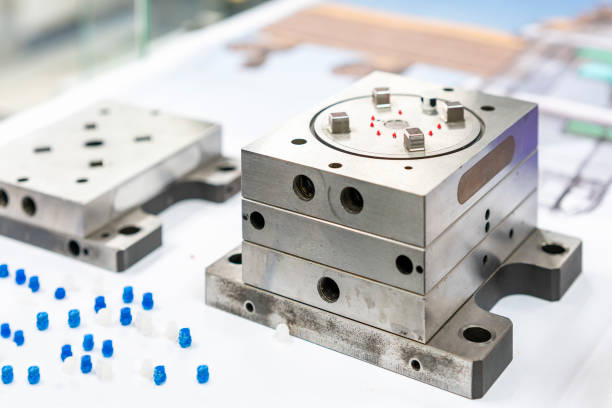
Micro Injection Molding vs. Multi-Cavity Injection Molding: A Sourcing Guide
In custom plastic manufacturing, procurement teams face a critical tooling decision. They must balance tight tolerances with competitive unit costs. The right molding strategy depends on part size, precision, volume, and production goals. For medical devices and consumer electronics, this decision becomes even more important. Product miniaturization often requires specialized molding capabilities. Meanwhile, mass-market products demand high output and lower unit costs.
Choosing the wrong molding strategy can create unnecessary production challenges. These challenges may include higher scrap rates, faster tooling wear, and inflated unit economics. Therefore, buyers should evaluate part geometry before selecting a tooling architecture.
Micro injection molding focuses on ultra-small components and extreme dimensional precision. In contrast, multi-cavity injection molding increases production output within each machine cycle. The right choice can improve both product performance and long-term manufacturing economics.
At WIN WIN, we provide tailored custom plastic injection molding solutions for demanding global industries. This guide compares micro molding and multi-cavity tooling from technical and commercial perspectives. It also helps procurement teams identify the most suitable strategy for their projects.
What Products Are Ideal for Micro Injection Molding?
The first step is understanding when conventional injection molding reaches its practical limits. Micro injection molding is designed for components with extremely small dimensions and precise features.
Understanding Micro Molding Geometry
Micro injection molding is more than simply producing a small plastic part. It is designed for parts weighing fractions of a gram. These components may also contain micron-scale walls or complex internal geometries.
Standard injection molding machines may struggle with these requirements. They may lack the shot-size control required for extremely small components. Thermal stability and dynamic injection pressure also become increasingly important.
For this reason, micro molding requires specialized equipment and tooling. The process must control material flow, mold temperature, injection pressure, and dimensional variation.
Core Micro Molding Applications
Micro injection molding serves several industries where size and precision are critical.
Medical Devices & Life Sciences:
Applications include surgical micro-gears, bio-absorbable implants, catheter tips, microfluidic chips, and drug-delivery nozzles. These components can require medical-grade resin processing and highly controlled dimensions.
Precision Electronics & Optics:
Common applications include micro connectors, fiber-optic housings, wearable sensor frames, micro-switches, and camera module brackets. Small geometric features often make conventional molding strategies less suitable.
Automotive & Industrial Sensors:
Applications include micro-actuator gears, fuel injector components, and high-precision sensor caps. These parts require consistent dimensional control across production batches.
Micro Injection Molding Tolerances
Micro molding can achieve tolerances as tight as ±0.001 mm to ±0.01 mm. This corresponds to approximately ±1 µm to 10 µm.
Maintaining this level of precision requires more than a high-quality mold. It also requires specialized micro-tooling and electric injection units. Dynamic mold temperature control helps maintain process stability during production.
Automated vision inspection systems can further verify critical dimensions. Together, these technologies support consistent output for demanding micro-scale applications.
How Multi-Cavity Injection Molding Reduces Unit Costs
Micro injection molding solves a precision problem. However, high-volume production creates a different manufacturing priority. For standard-to-precision components, buyers often need to maximize output while controlling unit costs. This is where multi-cavity injection molding becomes particularly valuable.
The Economics of Multi-Cavity Tooling
Injection molding costs involve both initial tooling investment and production volume. The basic relationship can be expressed as:
Total Cost = Initial Tooling CapEx + (Per-Unit Piece Price × Production Volume)
A single-cavity mold generally requires a lower initial investment. The original cost range is approximately $2,000–$5,000. However, it produces only one component during each press cycle.
Multi-cavity molds increase the number of parts produced per cycle. Common configurations include 4-cavity, 8-cavity, 16-cavity, and 32-cavity tools. As production volume increases, this higher cavity count can significantly reduce the effective cost per part.
Machine Time Optimization
An 8-cavity mold can produce eight parts during roughly the same cycle time. Compared with a single-cavity mold, this can reduce press-time costs by up to 80% per unit.
The exact savings depend on the production process and cycle conditions. However, the basic economic advantage comes from producing more parts per machine cycle.
Amortizing Tooling Investment
Multi-cavity tooling usually requires a higher initial investment. A high-volume steel tool may cost approximately $25,000–$50,000+.
For production volumes of 100,000+ units, this investment can be distributed across a much larger output. As a result, tooling cost per piece can fall to fractions of a cent. Therefore, the higher upfront CapEx can make financial sense for long production runs.
Labor and Processing Efficiency
Automation can further improve the economics of high-cavity molding. Hot-runner systems can reduce runner material waste during production.
They can also reduce manual trimming requirements. This helps improve labor efficiency while supporting consistent production output.
Micro Injection Molding vs. Multi-Cavity Injection Molding
The two strategies solve different manufacturing challenges. Micro molding prioritizes extremely small dimensions and tight tolerances. Multi-cavity molding prioritizes throughput and low unit costs.
The following matrix summarizes the main technical and commercial differences.
| Technical & Commercial KPI | Single-Cavity / Standard Molding | Micro Injection Molding | Multi-Cavity High-Volume Molding |
|---|---|---|---|
| Primary Project Objective | Low-volume / Prototyping | Micro-part / Extreme precision | Maximum output / Lowest unit cost |
| Typical Part Weight | 1 g–500 g+ | <0.001 g–1 g | 1 g–100 g |
| Achievable Tolerances | ±0.05 mm–±0.1 mm | ±0.001 mm–±0.01 mm (±1–10 µm) | ±0.02 mm–±0.05 mm |
| Initial Tooling Investment | Low ($2,000–$8,000) | Moderate–High ($15,000–$40,000) | High ($25,000–$80,000+) |
| Unit Production Cost | Higher ($1.50–$5.00/pc) | Medium–High, driven by material and precision | Lowest ($0.05–$0.50/pc) |
| Ideal Target Volume | 1,000–10,000 units | 10,000–1,000,000+ micro units | 100,000–5,000,000+ standard units |
| Key Industries | Pilot runs, industrial hardware | Medical devices, optics, micro-electronics | Consumer electronics, medical disposables |
This comparison highlights an important sourcing principle. Buyers should not select tooling based on volume alone. Part geometry and dimensional requirements must also guide the decision.
When Should Buyers Choose Micro Injection Molding?
The first decision point is the physical size and precision of the component. If part weight falls below 1 gram, micro molding may become necessary. The same applies when features require micron-level accuracy.
For example, a requirement of ±0.005 mm can justify micro injection molding. This remains true even when the overall production volume is high.
In these applications, specialized molding equipment helps control extremely small material shots. It also provides the process stability required for precise micro-scale features.
When Does Multi-Cavity Injection Molding Make More Sense?
For standard-sized components, production volume becomes a major economic factor.
If planned production exceeds 50,000 units, buyers should evaluate higher cavity counts. Moving from a 2-cavity tool to an 8-cavity or 16-cavity mold can create significant savings.
The higher tooling investment can then be offset by lower per-unit production costs. This makes multi-cavity tooling particularly attractive for long-term production programs.
However, cavity count should not be selected based on volume alone. Mold flow, part geometry, material behavior, and cycle requirements must also be evaluated.
Strategic Procurement Guide for Custom Plastic Injection Molding
A structured evaluation can help procurement teams avoid unnecessary tooling investment.
1. Evaluate Dimensional Requirements First
Start by reviewing part weight, wall thickness, feature size, and tolerance requirements. If components weigh under 1 gram, micro molding may be appropriate. If critical features require micron-level accuracy, specialized micro tooling may also be necessary.
2. Calculate the Cavity Break-Even Point
Next, evaluate the expected lifetime production volume. For standard parts, volumes above 50,000 units can justify higher cavity counts.
Compare 2-cavity, 8-cavity, and 16-cavity configurations against expected production output. This helps determine when additional tooling CapEx becomes financially worthwhile.
3. Verify Rheology and Mold Flow
Before finalizing tooling, buyers should confirm the mold design and material behavior. A qualified molding partner should perform Design for Manufacturability (DFM) and Mold Flow Analysis.
These analyses help verify cavity filling and gate placement. They also help evaluate thermal control and potential molding issues before production begins.
Why Choose WIN WIN for Custom Plastic Injection Molding?
At WIN WIN, we provide tailored custom plastic injection molding solutions for global electronics and medical device manufacturers.
Our engineering approach combines tooling development, process optimization, and quality control. This helps customers balance technical requirements with long-term production economics.
Advanced Tooling Design
WIN WIN uses CNC machining, EDM, and flow simulation software for tooling development. These capabilities support both micro-precision molds and high-cavitation steel tooling. The tooling strategy can then be matched to the required part geometry and production volume.
Quality Assurance and Traceability
Quality control remains critical for both micro molding and high-volume production. WIN WIN operates under strict ISO and cleanroom-compatible manufacturing practices. Automated dimensional inspection is used to evaluate production batches.
This approach supports tight tolerances across long production runs. It also helps maintain consistent quality for demanding medical and electronics applications.
End-to-End Cost Optimization
Tooling decisions should consider more than the initial mold price. Material selection, cycle efficiency, cavity count, and long-term production volume all affect total cost.
WIN WIN supports resin selection across medical-grade, engineering, and commodity polymers. The team also provides DFM and tooling optimization to balance CapEx with unit-price targets.
Conclusion: Choosing the Right Injection Molding Strategy
The choice between micro injection molding and multi-cavity injection molding depends on two fundamental factors. These are part dimensions and total production volume.
Micro injection molding is the better fit for ultra-small components and extreme precision. Multi-cavity tooling is better suited to high-volume production where unit cost and throughput are priorities.
For procurement teams, the most effective strategy is therefore not simply choosing the cheapest mold. Instead, buyers should match tooling architecture with the actual technical and commercial requirements.
By making this decision early, manufacturers can reduce unnecessary tooling costs. They can also improve production efficiency and maintain required product performance.
Partner With WIN WIN for Strategic Sourcing
WIN WIN provides custom plastic injection molding solutions for demanding global industries. Our services support projects ranging from precision micro components to high-volume molded products. The team can support CAD file review, DFM analysis, tooling development, production optimization, and quality inspection.





Add comment