

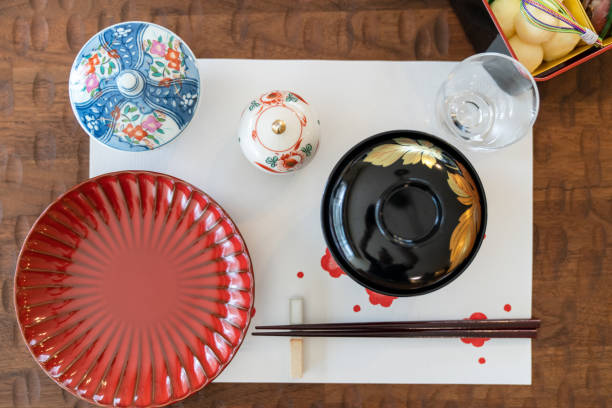
When outfitting or expanding a Japanese restaurant, operators and financial decision-makers frequently debate the choice between traditional ceramic tableware and high-grade injection-molded tableware. While ceramic plates are often favored for their heavy, traditional aesthetic, many restaurateurs overlook the operational financial drain caused by high turnover and breakage in high-volume commercial kitchens.
In real-world commercial environments, ceramic dinnerware suffers an average annual breakage rate between 15% and 25%. On the other hand, engineering-grade injection-molded vs ceramic tableware solutions—such as commercial-grade Melamine, ABS, or Polycarbonate sushi trays, bento boxes, and ramen bowls—maintain an annual breakage rate well below 2%.
Evaluating your purchasing strategy through a commercial tableware 5 year TCO (Total Cost of Ownership) framework reveals that while ceramics may seem cost-effective initially, custom injection-molded plastic tableware drastically reduces ongoing replacement overhead, streamlines dishwasher logistics, and lowers operational expenditures over time.
1. The 5-Year Total Cost of Ownership (TCO) Calculation Framework
To illustrate the financial impact over a 5-year operating cycle, consider a medium-sized Japanese restaurant running 1,000 active service pieces (sushi platters, sauce dishes, and bento containers) under daily commercial dishwasher cycles and fast-paced table turnover.
| Cost Factor | Ceramic Tableware Line | Injection Molded Line |
|---|---|---|
| Active Tableware Units | 1,000 units | 1,000 units |
| Operating Cycle | 5 years | 5 years |
| Initial Purchase Cost | $5.00/unit = $5,000 | $8.00/unit = $8,000 |
| Annual Breakage Rate | ~20% (~200 pcs/year) | <2% (<20 pcs/year) |
| 5-Year Replacements | $5,000 | $800 |
| Labor & Handling Waste | High | Minimal |
| Estimated Total TCO | ~$10,000+ | ~$8,800 |
1. Initial Capital Expenditure (CapEx)
-
Ceramic Tableware: Lower initial unit price ($\approx \$3.00 – \$5.00$ per standard dish).
-
Custom Injection Molded Tableware: Higher initial unit cost ($\approx \$6.00 – \$9.00$ per piece due to precision mold tooling and high-density food-grade resin compounds).
2. Operational Replacement Expenditure (OpEx)
-
Ceramic Tableware: At a conservative 20% annual breakage rate, an operator replaces the entire fleet’s worth of dishes every five years. Over 5 years, replacement costs equal or exceed the initial procurement budget.
-
Injection Molded Tableware: With an annual breakage rate under 2%, replacement purchases are virtually eliminated, allowing kitchen managers to lock in predictable long-term supply chain budgets.
3. Kitchen Operating Efficiency & Dishwasher Throughput
Injection-molded commercial tableware is lightweight and thermal-shock resistant. Kitchen staff can stack and move larger quantities safely without chipping edges. High-density resin formulations withstand thousands of high-temperature commercial dishwasher sanitization cycles without cracking or color fading.
2. Technical Comparison Matrix: Injection Molded vs. Ceramic Tableware
The comparative table below maps key operational metrics across both material options to aid procurement teams in making informed purchasing decisions.
| Performance Metric / Operating Parameter | Commercial Ceramic Tableware | Custom Injection Molded Plastic Tableware | Financial & Operational Impact |
| Annual Commercial Breakage Rate | 15% – 25% per year | $< 2\%$ per year | Plastic eliminates constant re-ordering and stockouts |
| Impact & Drop Resistance | Fragile; prone to rim chipping & cracking | Ultra-high impact resistance | Reduces kitchen injury risks & scrap costs |
| Weight per Piece | Heavy ($\approx 400\text{g} – 800\text{g}$) | Lightweight ($\approx 150\text{g} – 350\text{g}$) | Speeds up table clearing & reduces staff fatigue |
| Dishwasher Thermal Tolerance | Susceptible to thermal shock glaze cracking | High thermal tolerance (Dishwasher Safe) | Extended service life under high-temp wash cycles |
| Branding & Visual Customization | Applied post-glaze decals (wears off) | In-mold decoration (IMD) / Molded Logos | Permanent branding that won’t fade or peel |
| 5-Year Overall Financial Yield | High recurring replacement costs | Low total lifecycle cost (High ROI) | Lowers overall cost per meal served |
3. Commercial Sourcing Q&A: Durability, Tactile Feel, and Customization
Q: What Is the Real-World Service Life of Commercial Injection Molded Tableware?
Under continuous, high-volume commercial restaurant conditions, high-quality food-grade injection-molded tableware (such as food-safe Melamine or specialized Polycarbonate) offers a service life of 3 to 5+ years.
Unlike ceramics that chip along exposed rims within weeks of daily handling, engineered plastic tableware retains its structural integrity, smooth surface glaze, and stain resistance across tens of thousands of service and washing cycles.
Q: How Does the Tactile Quality of Modern Injection Molded Tableware Compare to Ceramic?
Early plastic tableware suffered from a perception of feeling “cheap or flimsy.” However, modern precision injection molding processes utilize thick-wall mold cavities and heavy-density resin formulations to mirror the mass, heft, and cool-to-the-touch hand feel of ceramic or lacquerware.
Furthermore, advanced mold polishing and textured cavity tooling allow manufacturers to replicate matte stone textures, traditional Japanese lacquer finishes, or fine-grain ceramic glazes. This enables Japanese restaurants to preserve an elevated dining experience while gaining shatterproof durability.
Q: What Is the Typical Minimum Order Quantity (MOQ) for Custom In-Mold Branded Tableware?
For custom injection molded tableware featuring personalized brand logos, custom pantone colors, or unique geometric shapes:
-
Standard Molded Colorways: Production runs typically start at 500 to 1,000 units per design using existing mold bases.
-
Fully Custom Shape Tooling & In-Mold Decoration (IMD): Opening a custom mold cavity and integrating permanent, wear-resistant brand logos generally carries an MOQ of 2,000 to 5,000 units.
For multi-location restaurant chains, amortizing the initial tooling cost across a multi-thousand-unit order delivers a significantly lower per-unit cost than purchasing unbranded off-the-shelf ceramic stock.
Technical Knowledge Summary
Evaluating Japanese restaurant tableware sourcing through a Total Cost of Ownership lens demonstrates that unit price is only a fraction of the real cost. While ceramic dinnerware carries a lower entry price, its high annual breakage rate (15–25%) creates ongoing replacement costs, labor inefficiencies, and inventory disruptions.
In contrast, engineering-grade injection-molded tableware provides high impact resistance, an annual breakage rate below 2%, permanent in-mold branding options, and complete dishwasher compatibility. Over a 5-year operational lifecycle, custom injection-molded tableware lowers total operating expenses, protects kitchen safety, and delivers a higher return on investment for commercial dining establishments.
Optimize Your Restaurant Tableware Strategy
Planning a new Japanese dining venue, upgrading an existing chain’s tableware line, or analyzing kitchen replacement costs? Contact our technical product specialists to request material sample kits, review custom mold tooling options, or receive a comprehensive 5-year TCO cost analysis for your restaurant fleet. 👉 WIN WIN Facebook
Add comment