

Choosing the right gating system is vital for your manufacturing success. This decision impacts your production speed, material waste, and total costs. However, many project managers struggle to choose between hot and cold runners. Each system offers a unique set of technical advantages. This guide compares these two essential “efficiency personalities.” We help you select the best path for your next injection molding project.
1. The Core Differences: A Side-by-Side Duel
Every project requires a specific balance of cost and speed. Use this table to understand the fundamental trade-offs.
| Dimension | Cold Runner System | Hot Runner System |
| Material Waste | High (10-30% scrap) | Zero runner waste |
| Cycle Time | Longer (Must cool runner) | 20-30% shorter cycles |
| Mold Cost | Lower initial investment | 30-50% higher cost |
| Best For | Small to medium batches | High-volume production |
2. Cold Runners: The Simple and Robust Choice
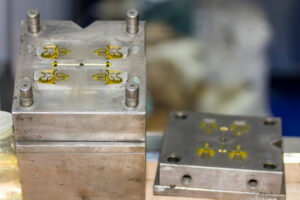
Cold runners are the traditional standard in the injection molding industry. They consist of unheated channels that solidify with the part.
The Setup Advantages
The design of a cold runner mold is very straightforward. Consequently, the initial tooling costs remain quite low. Furthermore, these molds are easier to maintain over time. They work perfectly for simple parts and smaller production runs. Therefore, they offer a low-risk entry for new product launches.
The Material Trade-off
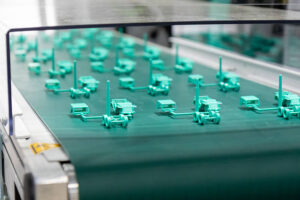
However, every cycle creates a solid plastic runner. This leads to 10% to 30% material waste per shot. You must regrind or discard this extra plastic. Consequently, your material costs increase significantly over time. Furthermore, the thick runner dictates the cooling time. This results in a slower overall production pace.
3. Hot Runners: The High-Speed Precision Masters
Hot runners keep the plastic molten inside the manifold. The plastic only solidifies once it enters the mold cavity.
The Power of Zero Waste
This system eliminates the runner scrap. You only use the exact amount of plastic needed. Consequently, you save a fortune on raw material costs. This is especially true for expensive, high-performance resins. Therefore, it is the most sustainable choice for modern factories.
Maximizing Production Output
Hot runners drastically reduce the total cycle time. You do not have to wait for a thick runner to cool. As a result, you can produce 20% to 30% more parts per hour. Furthermore, they are essential for complex multi-cavity molds. They ensure perfectly even filling across all cavities. Consequently, you achieve superior part consistency and quality.
4. Finding the Special Value for Your Project
The “winner” of this duel depends on your specific goals.
-
For High-Volume Parts: Hot runners are the clear champion. The material savings eventually pay for the expensive mold.
-
For Transparent Parts: Hot systems prevent unsightly gate marks. Therefore, they are the standard for lenses and luxury packaging.
-
For Prototype Runs: Cold runners provide the best financial value. They allow you to test designs without a massive investment.
Conclusion: Balancing Investment and Long-Term Profit
Efficient manufacturing starts with the right gating strategy. You must look beyond the initial mold price.
Consider your total production volume and material costs. Hot runners deliver incredible speed and zero waste. Conversely, cold runners offer simplicity and lower upfront risks. Choose the system that fits your long-term business strategy. Let professional engineering drive your project toward higher efficiency. Your choice today defines your profit margins tomorrow.

2 comments
Lisa Miller
Excellent breakdown of hot runner vs cold runner systems. A skilled mold making company understands how choosing the right system impacts efficiency, waste reduction, and cost. This comparison offers valuable insights for improving injection molding performance.
WIN-WINAuthor
Thank you for your thoughtful feedback — we truly appreciate it.
You’re absolutely right: selecting between hot runner and cold runner systems is not just a technical choice, but a strategic decision that directly impacts **production efficiency, material utilization, and overall cost structure**. A skilled mold maker must evaluate product design, volume, material behavior, and lifecycle cost to recommend the optimal solution.
At **WIN-WIN Injection Molding**, we always aim to balance performance, sustainability, and cost-effectiveness to help our partners achieve the best long-term value.
Glad you found the comparison insightful — and always happy to exchange more ideas on optimizing injection molding performance.
If any questions, warmly welcome to contact us via wayne86@tigerbrotherplastic.com, thanks.