

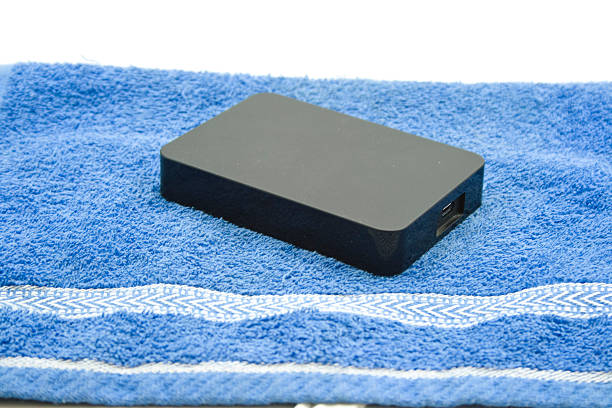
Fast charging has completely changed our lives. We moved quickly from 18W to 100W+. Consequently, this power jump brings massive thermal challenges. Creating injection-molded power bank cases is now a high-tech mission.
The Evolution of Power Density
A few years ago, 18W was the standard. Now, users demand 65W or even 120W speeds. However, higher power generates intense internal heat.
Therefore, the outer shell must work harder. It is no longer just a decorative box. Instead, it acts as a vital cooling system. Every millimeter of the design must handle rising temperatures.
Three Major Challenges for Shells
When power increases, the physics of the device changes. We must address three specific areas during production:
-
Heat Spikes: Internal temperatures can soar during 100W output.
-
High Voltage: Faster charging requires superior electrical insulation.
-
Structural Stress: Heavy connectors need stronger support at the ports.
Because the shell is the only barrier, it must stay cool. We must prevent the plastic from softening or warping. Thus, precision in injection-molded power bank cases is essential.
Smart Solutions for Modern Housing
How do we solve these thermal and safety issues? We use three primary strategies in our designs:
-
Conductive Plastics: We select special polymers that pull heat away.
-
Airflow Channels: We optimize internal vents and cooling paths.
-
Flame Retardancy: We use V-0-rated materials to stop fires.
By choosing these advanced materials, we ensure the device stays safe. Furthermore, these designs protect the delicate lithium batteries inside.
A Message for Product Engineers
Always remember that fast charging involves the whole machine. It is not just about the charging chip. If the shell fails, the product fails.
Select a partner who understands these complex thermal dynamics. Consequently, your injection-molded power bank cases will meet global safety standards. Great performance starts with a cool, stable exterior.



Add comment