

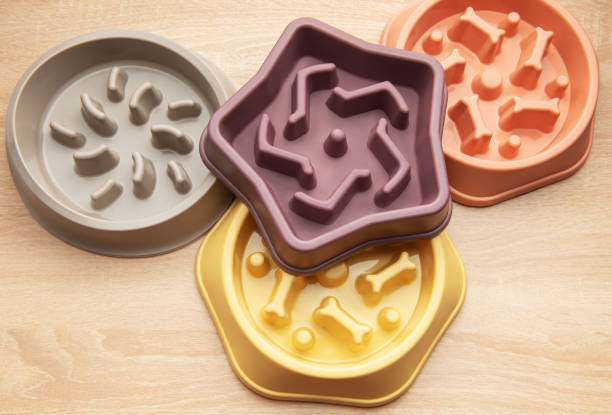
A slow-feeder bowl looks like a plastic puzzle for pets. These intricate “mazes” prevent dogs from eating too fast. However, creating these deep ridges and bone-shaped pillars is a technical challenge. High-quality injection-molded pet slow feeder bowls require advanced tool engineering. This guide reveals the “language” of sliders and lifters in the mold. We help you understand the mechanics behind every successful slow feeder design.
1. The Challenge of the “Internal Maze.”
Standard bowls have smooth, sloping walls for easy production. In contrast, a slow feeder features deep, vertical obstructions.
The Problem of “Undercuts”
Most slow feeders use “volcano” shapes or bone-shaped pillars. Consequently, these structures create “undercuts” that trap the plastic in the mold. Furthermore, a simple two-plate mold cannot release these complex shapes. If you force the part out, it will surely tear or deform. Therefore, engineers must use moving mechanical parts to “free” the bowl.
2. Decoding the Mold: Sliders vs. Lifters
Precision movement inside the steel tool allows the plastic to exit safely.
Sliders (The Horizontal Movement)
Sliders move perpendicular to the direction of the mold opening. Consequently, they pull away from the side of the bowl before ejection. This is essential for creating external handles or side textures on injection-molded pet slow feeder bowls. Furthermore, sliders ensure that the outer walls remain crisp and burr-free. Therefore, they are the key to high-end aesthetic finishes.
Lifters (The Interior Specialists)
Lifters sit at an angle inside the core of the mold. As the ejector plate moves up, the lifter slides inward and upward simultaneously. Consequently, it releases the internal “maze” structures without scratching the plastic. This mechanism allows for very deep ridges that challenge the pet. Furthermore, lifters prevent the vacuum effect that often cracks large plastic parts. Therefore, they are vital for the durability of the final feeder.
3. How Complexity Impacts Your Mold Cost
The more “puzzles” you add to a bowl, the more the tool costs.
-
Number of Moving Parts: Each slider or lifter adds significant machining time.
-
Maintenance Requirements: Complex molds need more frequent cleaning and lubrication.
-
Cycle Time: Moving parts can slightly increase the time for each “shot.”
Consequently, you must balance the difficulty of the maze with your budget. Professional injection-molded pet slow feeder bowls optimize these angles for speed. Furthermore, smart design reduces the total number of lifters needed. Therefore, you achieve a complex look while keeping production costs manageable.
4. Advice for Designers: Designing for Success
A great slow feeder must be easy to manufacture and safe for pets.
-
Add Draft Angles: Ensure every pillar has a slight taper for easier release.
-
Radius the Edges: Avoid sharp corners that can trap plastic or hurt a pet’s tongue.
-
Uniform Wall Thickness: Prevent “sink marks” by keeping the plastic thickness consistent.
Consequently, your mold will run smoother and produce fewer defective parts. Injection-molded pet slow feeder bowls are a perfect blend of art and engineering. Furthermore, using high-quality steel for the lifters extends the life of your tool. Therefore, invest in a robust mold design to ensure long-term market success.
Conclusion: From Steel to the Pet’s Plate
Creating a functional slow feeder requires more than just a creative idea.
Stop worrying about how to release those complex, deep internal “maze” shapes. Instead, embrace the precision of modern slider and lifter technology in your mold. Consequently, your injection-molded pet slow feeder bowls will be both beautiful and durable. Experience the power of professional injection molding for your pet brand today. Your products deserve the high-tech foundation of a perfectly engineered mold.


Add comment