

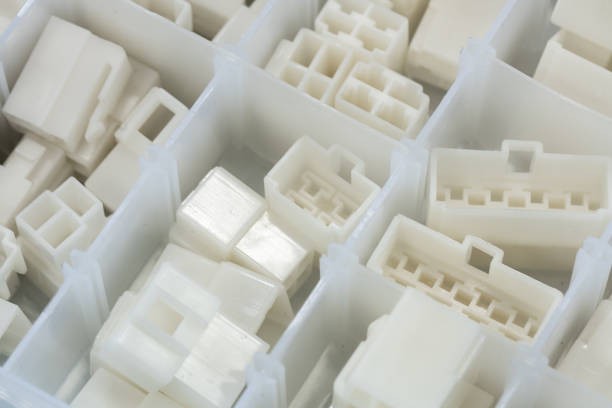
In the world of precision manufacturing, a tiny geometric detail can determine the success or failure of a high-volume project. Specifically, the transition between two surfaces—whether it is a sharp 90-degree corner or a smooth radius—impacts the physical integrity of every part produced. Engineers often say that “sharp corners are the enemy of durability.” Consequently, professional custom plastic injection molding requires a deep understanding of how geometry affects structural longevity. This guide explains why rounding your edges is the smartest way to strengthen your plastic components.
The Physics of Failure: Stress Concentration
Sharp internal corners act as “stress risers” within a molded component. When a finished part experiences an external load or impact, the energy does not distribute evenly across the surface. Instead, the force funnels directly into the sharpest point of the geometry. Consequently, a part that should be strong may crack or snap unexpectedly at a 90-degree junction. Furthermore, this “stress concentration” effect is one of the leading causes of premature product failure in the field. Therefore, replacing sharp angles with a radius is a mechanical necessity for safety and reliability.
Expert Recommendation: We suggest a minimum internal and external radius of R0.5mm. For optimal strength in load-bearing parts, a radius of R1.0mm to R2.0mm is highly recommended.
Optimizing the Flow of Molten Plastic
Beyond structural strength, rounded corners significantly improve the actual custom plastic injection molding process. Molten plastic behaves like a thick fluid; it prefers to flow through smooth, unobstructed channels. Sharp corners create immense flow resistance and turbulence as the material fills the cavity. Consequently, air can become trapped in the sharp “dead zones” of the mold, leading to visible burn marks or weak spots. Furthermore, smooth radii allow for a more uniform cooling process across the entire part. This reduces the risk of warping or internal tension as the plastic solidifies.
-
Faster Cycle Times: Improved flow allows the mold to fill more quickly and consistently.
-
Lower Scrap Rates: Reduced air traps and burning lead to higher yield and lower waste.
-
Better Surface Finish: Smooth transitions eliminate the visual “knit lines” often found near sharp corners.
Strength Analysis: Sharp vs. Rounded Corners
| Geometric Feature | Sharp 90° Corner | Rounded Radius (R1.0mm) |
| Stress Distribution | Concentrated at a single point | Distributed across a curve |
| Impact Resistance | Poor (Brittle behavior) | High (Flexible & Tough) |
| Molding Ease | Difficult (Air traps/Burn) | Easy (Smooth flow) |
| Part Longevity | Low (Prone to cracking) | High (Industrial Grade) |
Consequently, adding a simple curve transforms a fragile prototype into a robust industrial component. Furthermore, this minor adjustment to the CAD file can save thousands of dollars in potential warranty claims and mold repairs. Therefore, professional designers always prioritize “fillets” and “rounds” during the early stages of development.
Conclusion: Designing for Peak Performance
A great product is built on the foundation of smart, stress-free geometry.
Stop compromising the durability of your products by ignoring the hidden dangers of sharp corners. Instead, embrace the mechanical advantages of a professional custom plastic injection molding design that prioritizes smooth transitions. Consequently, your parts will look better, last longer, and perform more reliably under pressure. Experience the difference that precision engineering and rounded geometry bring to your manufacturing today. Your brand deserves the strength that only a well-rounded design can provide.



Add comment