

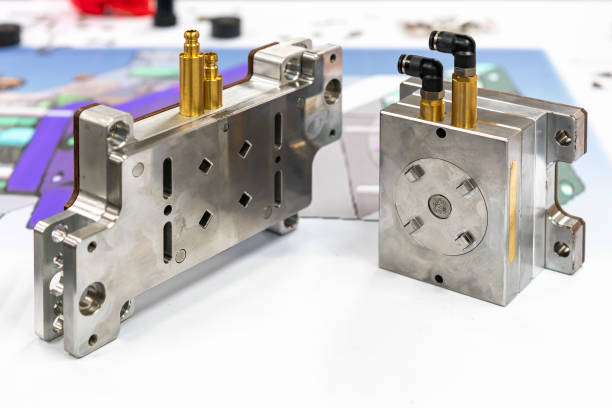
When evaluating custom injection molding tooling options, procurement managers, tooling engineers, and product designers frequently encounter a fundamental cost-benefit decision: “Hot runner molds require a higher upfront capital investment than cold runner systems—will the savings in material waste and reduced cycle times actually offset the initial tooling premium over the product lifecycle?”
While cold runner molds feature lower initial design and fabrication costs, they generate continuous runner scrap, require regrind handling, and extend cooling phases. Conversely, a hot runner injection molding system maintains molten plastic within heated manifolds, eliminating runner waste and shortening cycle times.
Calculating the true Total Cost of Ownership (TCO) requires analyzing material utilization rates, thermodynamic cycle time savings, press hourly rates, and long-term maintenance costs. This guide breaks down the financial and technical mechanics of hot runner vs. cold runner tooling for custom injection molding projects.
Hot Runner vs. Cold Runner Injection Molding: Cost, Waste and Tooling ROI
1. Why Runner System Selection Affects Long-Term Injection Molding Costs
In high-volume custom injection molding, resin can account for 45%–70% of total unit production costs. Therefore, the mold runner system can directly affect material utilization and manufacturing margins.
A cold runner mold allows plastic to solidify inside the sprue and runner channels during each molding cycle. After ejection, operators must trim, regrind, or discard the runner material.
A hot runner injection molding system uses a heated manifold to keep the polymer molten until it reaches the gate. This design minimizes runner waste and allows more of the purchased resin to enter the product cavity.
Hot Runner vs. Cold Runner Material Flow
| Runner System | Material Flow | Main Production Impact |
|---|---|---|
| Cold Runner Mold | Plastic solidifies inside the sprue, runners, and cavity | Creates runner scrap after every molding cycle |
| Hot Runner Mold | Heated manifold keeps plastic molten up to the gate | Minimizes runner waste and improves material utilization |
How Cold Runner Scrap Increases Material Costs
In many cold runner systems, runner weight can represent approximately 10%–20% of the total shot weight.
Manufacturers may regrind some thermoplastics and blend the recycled material back into production. However, repeated thermal processing can affect polymer properties and restrict acceptable regrind ratios.
For engineering materials such as PA66, PBT, and PC/ABS, manufacturers often control regrind content according to application and material requirements.
High-performance materials such as PEEK and PPS may require much stricter material-control procedures. Medical-grade polymers can also have specific regulatory and validation requirements.
Therefore, runner waste can become a significant cost factor in high-volume production.
2. How Hot Runner Systems Improve Material Utilization and Cycle Efficiency
Manufacturers can evaluate the return on investment of a hot runner injection molding tool through two major factors:
- Material savings
- Cycle time and machine utilization
Material Utilization and Tooling ROI
Consider a custom injection molding project with the following production conditions:
- Annual production volume: 500,000 units
- Engineering resin price: $3.50/kg
- Part weight: 50 grams
- Resin cost per finished part: $0.175
If a cold runner system generates a 15% runner scrap ratio, the annual material waste can become substantial.
Under the stated production assumptions, the estimated annual runner waste is approximately 3,750 kg, equivalent to about $13,125 in resin value.
A hot runner system can substantially reduce this runner waste.
Over a three-year production period, the potential material savings can reach approximately $39,375, depending on actual process conditions and material prices.
This potential saving can offset a portion of the additional investment required for a hot runner mold.
Actual ROI should always account for resin price, runner weight, regrind policy, production volume, mold maintenance, and machine operating costs.
Cycle Time and Injection Molding Machine Efficiency
Injection molding cycle time typically consists of several production stages:
Cooling often represents a significant portion of the total molding cycle.
A thick cold sprue or runner can require additional cooling before mold opening and part ejection. This can increase the overall cycle time.
A hot runner system removes the solidified runner network from the cooling process. As a result, cooling requirements can focus primarily on the molded component itself.
For example, reducing the cycle by 3–5 seconds per shot across a high-volume production program can create substantial machine-time savings.
At 500,000 production cycles, a 3–5 second reduction represents approximately 417–694 machine hours.
The actual savings depend on the injection molding machine’s hourly operating rate and production schedule.
3. Hot Runner vs. Cold Runner Mold: Key Differences
The following comparison helps tooling engineers and procurement teams evaluate both mold architectures.
| Technical & Economic Factor | Hot Runner Injection Molding | Cold Runner Injection Molding |
|---|---|---|
| Material Utilization | Near 100% cavity material utilization | Approximately 80%–90%, depending on runner design |
| Runner Waste | Minimal runner waste | Produces solidified runners every cycle |
| Cooling Requirements | Primarily based on molded part geometry | Influenced by both part and runner thickness |
| Initial Tooling Cost | Higher due to manifold, heaters, and controls | Lower initial tooling investment |
| Regrind Requirement | Can minimize dependence on regrind | May generate more runner regrind |
| Maintenance | Requires heater, thermocouple, manifold, and nozzle maintenance | Generally simpler mechanical maintenance |
| Production Volume | Well suited to medium- and high-volume production | Suitable for low-, medium-, and selected high-volume applications |
| Material Selection | Useful for applications requiring controlled material utilization | Flexible for many conventional thermoplastic applications |
The best runner system depends on production volume, resin cost, part geometry, quality requirements, and tooling budget.
4. How to Select the Right Injection Molding Runner System
When sourcing custom injection molding tooling, procurement teams should evaluate both the initial mold price and the long-term production cost.
Calculate the Hot Runner Break-Even Point
Request quotations for both cold runner and hot runner mold configurations.
Then compare:
- Annual production volume
- Resin price per kilogram
- Runner weight
- Regrind utilization
- Injection molding machine rate
- Cycle time
- Mold maintenance costs
- Expected tooling lifespan
This calculation provides a clearer picture of the actual tooling payback period.
Choose Between Thermal Gates and Valve Gates
Thermal Gate Systems
Thermal gates provide a relatively cost-effective hot runner configuration for many high-volume molded products.
They work well when the application can accept the expected gate appearance and vestige.
Valve Gate Systems
Valve gates provide more precise melt control and cavity filling.
They are often considered for applications requiring tighter control over gate appearance, filling behavior, or injection timing.
Typical applications can include optical components, cosmetic housings, and precision molded products.
5. Evaluate Hot Runner Temperature Control
Temperature stability directly affects polymer processing quality.
A professional hot runner system should use suitable multi-zone temperature control for the manifold and nozzles.
Closed-loop PID controllers can continuously monitor temperature and adjust heater output.
This approach helps maintain consistent melt temperature and reduces the risk of localized overheating during production.
Manufacturers should also define appropriate procedures for production pauses, startup, shutdown, and material changes.
6. Establish a Hot Runner Maintenance and Spare Parts Plan
Hot runner molds require planned maintenance to maintain stable production performance.
Procurement teams should confirm the availability of essential replacement components before production begins.
Common spare parts include:
- Heater bands
- Thermocouples
- Nozzle tips
- Valve components
- Sealing components
- Temperature sensors
Using readily available commercial components can help reduce maintenance downtime and simplify long-term tooling management.
7. When Should You Choose Hot Runner Injection Molding?
Hot runner tooling can provide strong economic benefits when production volume is sufficiently high.
It is particularly relevant when manufacturers need to:
- Reduce runner material waste
- Minimize dependence on regrind
- Improve material utilization
- Reduce cycle time
- Increase injection molding machine capacity
- Process expensive engineering resins
- Maintain consistent multi-cavity production
- Support long-term mass production
Cold runner molds can remain a practical choice when tooling budgets are limited, or production volumes are relatively low.
Therefore, manufacturers should evaluate the complete production lifecycle instead of comparing mold prices alone.
Technical Summary
The choice between hot runner and cold runner injection molding affects material consumption, cycle time, tooling investment, and long-term production costs.
Cold runner molds generally provide a lower initial tooling cost. However, they generate solidified runner material during every molding cycle.
Hot runner injection molding minimizes runner waste and can improve production efficiency. These advantages become increasingly valuable as production volume and resin costs increase.
A complete tooling evaluation should therefore consider material savings, cycle time, machine utilization, maintenance requirements, resin characteristics, and expected production volume.
WIN WIN provides custom injection molding services, precision mold manufacturing, hot runner integration, and DFM analysis for industrial and commercial applications. Its engineering team can support runner system selection according to product geometry, material requirements, production volume, and long-term manufacturing objectives.




Add comment