

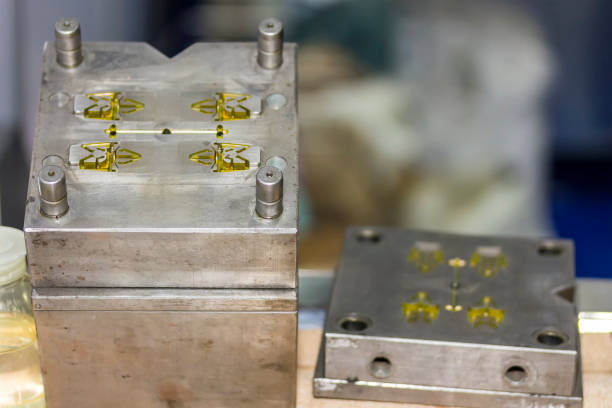
When sourcing custom plastic components, product managers and procurement teams operating multi-color product lines often encounter a frustrating commercial hurdle: “Our order volumes are relatively modest, but we require multiple color variations. Why do custom suppliers insist that color purging in a hot runner system is so complex, and why are extra setup charges applied for every color change?”
Is this fee structure an industry excuse, or does it reflect a fundamental physical constraint in injection molding engineering?
Operating hot runner molds for low-volume, multi-color production creates an operational conflict known as the color change trap in hot runner injection molding. While hot runners excel at high-volume, single-color mass production by eliminating runner waste, their internal flow geometry presents severe purging challenges during color transitions.
This technical guide analyzes the physical mechanics of molten resin flow, compares hot runner purging against cold runner systems, outlines purge optimization techniques, and provides procurement strategies for custom hot runner injection molding projects.
Hot Runner vs. Cold Runner: Color Change, Purging and Production Costs
Frequent color changes can significantly affect injection molding efficiency, especially during low-volume production runs. The tooling system directly influences changeover time, purge waste, material consumption, and production downtime.
To understand these differences, manufacturers must first examine how molten resin moves through hot runner and cold runner systems.
1. Why Hot Runner Systems Require More Purging During Color Changes
A hot runner mold keeps plastic resin molten inside heated manifold channels throughout production. Unlike a cold runner mold, the runner material does not solidify and eject with each molding cycle.
This design eliminates runner waste during normal production. However, it also creates additional challenges when manufacturers change resin colors.
Molten Resin Flow and Boundary Layer Retention
New color resin typically moves faster through the center of a hot runner channel. Resin near the heated manifold walls moves more slowly because of friction and boundary layer effects.
As a result, traces of the previous color can remain along the channel walls. The new resin must gradually displace this residual material during the purging process.
This effect becomes more noticeable when manufacturers switch from dark colors to light or transparent materials.
Dead Zones Can Retain Previous Color Resin
Hot runner manifolds include multiple flow paths, turns, valve gates, nozzles, and melt distribution points.
Poorly designed flow transitions can create low-flow areas where residual resin remains trapped. The previous pigment may then gradually enter subsequent molded parts during production.
Therefore, manifold flow design plays an important role in color change performance.
Color Change Can Increase Downtime and Material Waste
Hot runner color changes may require additional purge cycles before the new color reaches an acceptable visual standard.
Actual changeover time and purge consumption depend on factors such as:
- Manifold design
- Number of cavities
- Resin type
- Color concentration
- Processing temperature
- Mold temperature
- Purging compound
- Previous and new color combinations
Dark-to-light transitions generally require more purging than similar-color transitions.
2. Why Cold Runner Molds Can Simplify Multi-Color Production
Cold runner molds provide a different approach to color change management.
The resin inside the sprue and runner solidifies after each molding cycle. The solidified runner then ejects with the molded parts.
As a result, the mold does not retain a continuously molten manifold volume between production cycles.
This characteristic can make cold runner tooling attractive for low-volume, multi-color injection molding projects.
Reduced Mold-Based Color Residue
When production ends, the cold runner material leaves the mold during ejection.
Therefore, changing colors does not require purging a heated manifold system.
The molding machine barrel still requires appropriate purging. However, the mold itself contains no continuously heated runner network.
Faster Changeovers for Smaller Production Runs
Cold runner tooling can simplify color transitions because the mold does not contain a large volume of molten resin.
For some applications, color changes can be completed within approximately 10–20 minutes. Actual changeover time depends on the machine, resin, mold design, and required color standard.
This shorter setup period can reduce machine downtime during frequent color changes.
3. Hot Runner vs. Cold Runner for Multi-Color Injection Molding
The most suitable runner system depends on production volume, color frequency, part geometry, and cost structure.
| Manufacturing Factor | Hot Runner System | Cold Runner System |
|---|---|---|
| Runner Condition | Resin remains molten | Resin solidifies after molding |
| Normal Runner Waste | Very low | Higher due to solidified runners |
| Color Change | Requires manifold purging | Mainly requires barrel purging |
| Changeover Complexity | Higher | Lower |
| Typical Changeover Target | Application-dependent | Often easier for frequent changes |
| Tooling Investment | Higher | Generally lower |
| Cycle Efficiency | High | Moderate |
| High-Volume Production | Well suited | Can generate significant runner waste |
| Frequent Color Changes | Requires careful purging strategy | Generally easier to manage |
| Low-Volume Multi-Color Runs | May increase setup costs | Often more flexible |
The table highlights an important manufacturing trade-off.
Hot runner molds minimize runner waste during normal production, while cold runner molds can simplify frequent color changes.
4. When Should Manufacturers Choose Hot Runner Tooling?
Hot runner injection molding remains highly effective for large production volumes.
It eliminates the need to cool and eject runners during every molding cycle. This advantage can improve cycle efficiency and reduce material waste during long production runs.
Hot runners are particularly useful when manufacturers produce:
- High-volume components
- Thin-wall injection molded parts
- Large multi-cavity molds
- Cosmetic components with strict gate requirements
- Parts requiring balanced cavity filling
- Long-running single-color production
However, manufacturers should account for color change requirements during tooling selection.
A hot runner system can become less economical when the production schedule involves frequent low-volume color changes.
5. When Is Cold Runner Tooling More Suitable?
Cold runner injection molding can provide greater flexibility for smaller production batches.
It may be suitable when manufacturers frequently switch between colors or produce limited quantities for each color.
For example, a project producing several hundred or several thousand pieces per color may prioritize fast setup and lower tooling complexity over maximum cycle efficiency.
Typical applications include:
- Seasonal product colors
- Limited-edition products
- Private-label products
- Multi-color consumer products
- Prototype-to-production programs
- Small and medium production batches
Manufacturers should evaluate runner waste alongside changeover costs before making a tooling decision.
6. How to Reduce Color Change Waste in Hot Runner Molds
When a hot runner system is necessary, manufacturers can improve color change efficiency through better engineering and production planning.
Optimize Hot Runner Flow Channels
Use smooth, polished melt channels to reduce resin retention along internal surfaces.
Avoid unnecessary sharp turns and abrupt flow transitions that can create low-flow regions.
Improve Valve Gate Design
A streamlined valve gate structure can reduce resin stagnation around gate components.
Proper gate geometry also helps maintain consistent filling and reduce residual color contamination.
Use Suitable Purging Compounds
Professional purging compounds can help remove residual pigments and degraded resin from the injection unit and hot runner system.
The appropriate compound should match the resin type, processing temperature, and hot runner configuration.
Establish a Color Change Sequence
Production scheduling can reduce purge consumption by organizing colors logically.
A common strategy moves from lighter shades toward darker colors during the production schedule.
For example:
Natural → White → Yellow → Red → Black
The exact sequence should depend on the resin family, pigment concentration, product requirements, and manufacturer’s validated purging procedure.
7. B2B Procurement Guidelines for Multi-Color Injection Molding
Procurement teams should evaluate runner architecture before finalizing injection mold specifications.
Match Runner Design With Production Volume
Production volume per color provides an important starting point.
For high-volume production, hot runner tooling can reduce recurring runner waste and improve cycle efficiency.
For smaller multi-color batches, cold runner tooling may simplify changeovers and reduce manifold-related setup requirements.
The final decision should also consider part geometry, resin type, cosmetic requirements, cavity count, and expected production life.
Define Color Change Requirements in the Contract
Procurement agreements should clearly define:
- Expected color change time
- Acceptable purge consumption
- Color transition sequence
- Approved purging materials
- Color acceptance standards
- Setup labor charges
- Machine downtime charges
- First-piece approval requirements
Clear specifications help prevent unexpected changeover costs during mass production.
Evaluate the Mold Before Production
A professional mold review should consider the complete material flow path.
This includes the injection unit, sprue, runner, manifold, valve gates, nozzles, and cavity gates.
Understanding the entire flow system helps manufacturers identify potential resin retention points before production begins.
8. Hot Runner vs. Cold Runner: Key Cost Considerations
Runner system selection should focus on total production cost, rather than tooling price alone.
Hot runner tooling usually requires greater initial investment. However, it can reduce runner waste and improve cycle efficiency during large production volumes.
Cold runner tooling generally has a simpler structure and lower initial tooling cost. However, solidified runners increase material consumption during normal production.
For multi-color projects, manufacturers should also calculate:
Tooling Cost + Material Waste + Changeover Labor + Machine Downtime + Production Volume
This broader calculation provides a more realistic view of tooling economics.
Technical Summary
Hot runner and cold runner systems offer different advantages for injection molding production.
Hot runner tooling minimizes runner waste and supports efficient high-volume production. However, frequent color changes can require additional purging because residual resin remains inside heated manifold channels.
Cold runner tooling produces solidified runners during each cycle but can simplify color changes and reduce mold-based resin retention.
Therefore, manufacturers should evaluate production volume, color frequency, material type, part geometry, cycle requirements, and changeover costs before selecting a runner system.
WIN WIN provides custom injection molding and tooling solutions for global OEM customers. Our engineering team evaluates hot runner, cold runner, and hybrid mold configurations based on production requirements, material behavior, product geometry, and target manufacturing costs.


Add comment