

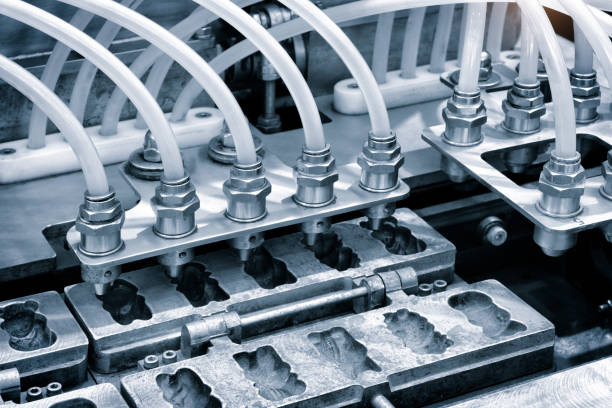
Product managers, hardware engineers, and procurement leaders initiating a custom manufacturing project frequently face a foundational material selection challenge: “Should our custom component be manufactured via standard thermoplastic injection molding or liquid silicone rubber (LSR) injection molding?”
While both processes share the term “injection molding,” their underlying thermodynamics, material states, tooling requirements, and cost structures are fundamentally opposite. Selecting the wrong molding technology leads to unexpected tooling retrofits, component failure under thermal stress, or inflated bill-of-materials (BOM) costs.
Understanding the five core technical watersheds between custom plastic and silicone injection molding helps procurement teams select the optimal manufacturing path, control production budgets, and streamline product development.
Custom Plastic vs. Silicone Injection Molding: How to Select the Right Manufacturing Process
Choosing between custom plastic injection molding and liquid silicone rubber (LSR) molding is an important engineering decision for product developers and procurement teams. Although both processes use injection molding technology, they differ significantly in material behavior, processing temperature, tooling requirements, flexibility, and end-use performance.
Therefore, understanding these differences before tooling begins can help manufacturers select the appropriate material and production process. The following comparison explains the key technical factors that distinguish thermoplastic injection molding from LSR molding.
Structural Comparison: Thermoplastic Molding vs. Liquid Silicone Rubber (LSR)
At the manufacturing level, thermoplastic and silicone molding follow fundamentally different processing principles. Thermoplastics are heated until they become molten and then solidified through cooling. In contrast, LSR is injected as a liquid and cured inside a heated mold.
The following table summarizes the primary differences:
| Technical Parameter | Thermoplastic Injection Molding | Liquid Silicone Rubber (LSR) |
|---|---|---|
| Material Raw State | Solid pellets / granules | Two-component liquid (A + B) |
| Thermodynamic Cycle | Hot injection → Cold mold setting | Cold injection → Hot mold vulcanization |
| Thermal Tolerance | Standard: 120°C to 150°C max | Extreme: -50°C to 230°C+ |
| Material Properties | Rigid, structural, high hardness | Flexible, elastic, biocompatible |
| Raw Material Cost | ~$2.00–$5.00 / kg (Commodity) | ~$15.00–$30.00 / kg (Grade) |
| Primary Application | Rigid housings, gears, structural frames, consumer enclosures | Gaskets, medical seals, baby nipples, soft-touch grips |
Because these materials behave differently during processing and use, material selection should be based on the actual functional requirements of the component rather than material cost alone.
2. The 5 Critical Decision Factors for Procurement Leaders
When evaluating plastic vs. silicone molding, procurement teams should consider five major engineering factors. These include processing temperature, environmental resistance, regulatory requirements, mechanical properties, and overall tooling economics.
Thermal Logic: Hot-Melt Cold-Set vs. Cold-Feed Hot-Vulcanization
First, the most fundamental difference is how each material responds to heat.
Thermoplastic Injection Molding
During thermoplastic injection molding, solid plastic pellets are heated inside the machine barrel until they reach a molten state. Typical processing temperatures are approximately 200°C–300°C.
The molten plastic is then injected under high pressure into a relatively cool mold maintained at approximately 20°C–80°C. As the material cools, it solidifies and takes the shape of the mold.
Liquid Silicone Rubber Molding
LSR follows the opposite thermal principle. Part A and Part B silicone components remain relatively cool at approximately 15°C–25°C inside the cold-runner system. This prevents premature curing before injection.
Afterward, the liquid silicone is injected into a heated mold maintained at approximately 170°C–210°C. Heat then triggers chemical cross-linking, or vulcanization, which converts the liquid material into an elastic solid.
As a result, understanding this hot-melt versus cold-feed process is essential when designing tooling and selecting molding equipment.
Operating Temperature Range & Environmental Resistance
Temperature resistance is another important consideration when selecting between plastic and silicone molding.
Standard engineering thermoplastics, including ABS, PC, and PP, can soften or deform when exposed continuously to temperatures above approximately 120°C–150°C, depending on the specific grade and application conditions.
By comparison, liquid silicone rubber can maintain its elasticity, flexibility, and physical form across a much wider temperature range of approximately -50°C to 230°C+.
Furthermore, silicone offers strong resistance to thermal aging, UV exposure, and weather degradation. Therefore, LSR molding is particularly suitable for components that operate under extreme temperatures or demanding environmental conditions.
Biocompatibility and Regulatory Compliance
Material safety becomes especially important for medical devices, food-contact components, and infant products.
Liquid silicone rubber is chemically inert and does not require plasticizers or phthalates to achieve its flexible properties. Depending on the selected grade and certification, LSR can meet requirements associated with FDA food-grade, LFGB, and ISO 10993 medical Class VI biocompatibility.
Thermoplastics can also be manufactured in medical and food-contact grades. Materials such as PEEK and polycarbonate are available for demanding applications. However, standard commodity plastics may require specific formulations, additives, or certified grades to satisfy particular regulatory requirements.
Consequently, buyers should always verify the exact material grade and applicable certification rather than evaluating compliance based solely on the material family.
Material Hardness, Flexibility, and Sealing Capabilities
Mechanical behavior provides another clear distinction between thermoplastics and silicone.
Rigid Structural Parts: Thermoplastics
Thermoplastic materials offer high mechanical strength, impact resistance, and structural rigidity. For this reason, they are widely used for:
- Electronic housings
- Consumer product enclosures
- Internal gears
- Vehicle dashboards
- Structural frames
- Mechanical components
When dimensional stability and load-bearing capability are primary requirements, rigid thermoplastics can provide the necessary structural performance.
Elastic Sealing Parts: Silicone
Liquid silicone rubber, on the other hand, provides excellent elasticity and flexibility. LSR materials can be formulated across a broad hardness range, typically around Shore A 10–80.
In addition, silicone offers strong tear resistance and elastic recovery. Therefore, it is widely used for:
- Waterproof seals
- O-rings
- Fluid-delivery valves
- Medical seals
- Flexible tubing components
- Soft-touch grips
For applications requiring both flexibility and reliable sealing, custom silicone molding provides a suitable manufacturing approach.
Material Cost Structures and Tooling Economics
Finally, procurement teams need to consider both raw material pricing and tooling investment.
Commodity thermoplastics such as PP and ABS typically cost approximately $2–$5/kg, while high-purity liquid silicone rubber can range from approximately $15–$30/kg, depending on grade and specifications.
However, raw material price is only one part of the total manufacturing cost.
LSR molds generally require high-precision machining and tight dimensional control. In some applications, machining tolerances can reach below 0.005 mm. In addition, specialized vacuum de-airing systems may be required because the low viscosity of silicone can increase the risk of flash and air-related defects.
Consequently, LSR tooling can require a higher initial investment than conventional plastic injection molds. Nevertheless, the appropriate choice ultimately depends on the component’s performance requirements, production volume, and target cost.
3. WIN WIN Custom Plastic and Silicone Molding Solutions
For projects involving different materials or complex assemblies, working with a manufacturer that supports both technologies can simplify the development process.
WIN WIN provides turnkey custom plastic and liquid silicone rubber injection molding services, supporting engineering teams throughout product development, tooling, and production.
Dual Manufacturing Capabilities
WIN WIN operates high-speed precision plastic injection molding equipment alongside cleanroom liquid silicone rubber (LSR) molding lines.
This integrated capability allows customers to develop both rigid plastic components and flexible silicone components through one manufacturing partner.
Overmolding & Multi-Shot Expertise
In addition, WIN WIN provides 2K and multi-shot molding capabilities for applications that combine rigid plastic substrates with soft silicone components.
For example, silicone gaskets or soft-touch sections can be molded directly onto rigid plastic substrates. This approach can eliminate the need for separate adhesive bonding in suitable applications.
Design for Manufacturability (DFM) Audits
Before mold production begins, engineering teams can conduct comprehensive DFM reviews, including:
- Mold-flow simulation
- Material shrinkage analysis
- Parting-line evaluation
- Gate and runner analysis
- Mold-design review
- Tooling feasibility assessment
As a result, potential manufacturing issues can be identified earlier in the development process.
4. Selection Matrix for Procurement Managers
The correct molding technology depends on the component’s functional requirements. The following matrix provides a practical reference for common applications:
| Project Component Requirement | Recommended Molding Technology | Recommended Material Grade |
|---|---|---|
| Rigid Electronic Housing / Enclosure | Thermoplastic Injection Molding | ABS / PC Blend |
| High-Temp Waterproof Gasket / O-Ring | Liquid Silicone Rubber (LSR) | Medical/Food Grade Silicone |
| High-Load Internal Mechanical Gear | Thermoplastic Injection Molding | Nylon (PA66) / POM |
| Infant Care / Medical Tubing Component | Liquid Silicone Rubber (LSR) | Platinum-Cured LSR |
| Soft-Touch Grip on Hard Handle | Overmolding (Plastic + Silicone) | Rigid PC Substrate + Soft LSR |
This selection framework can help procurement teams connect material properties with the actual requirements of the finished component.
Technical Summary
Selecting between custom plastic and silicone injection molding requires a comprehensive evaluation of structural requirements, operating temperatures, flexibility, regulatory requirements, tooling costs, and production targets.
For rigid structural components, complex frames, gears, and cost-sensitive high-volume enclosures, thermoplastic injection molding provides the required rigidity and mechanical strength. Conversely, liquid silicone rubber molding is suitable for applications requiring extreme thermal resistance from approximately -50°C to 230°C, elastic sealing, biocompatibility, or soft-touch performance.
For projects that combine rigid and flexible components, silicone overmolding and two-shot molding can provide an integrated manufacturing solution.
WIN WIN manufactures custom plastic injection molded parts, liquid silicone components, and two-shot overmolded assemblies for global customers in medical, consumer electronics, automotive, and industrial applications.



Add comment