

Global pet tech brands and corporate buyers face strict regulatory compliance checks when launching new feeding accessories. Sourcing safe, durable materials represents the most critical stage in your product development cycle. If your manufacturing components fail international food safety laboratory tests, customs officials can seize your entire retail inventory instantly.
When developing a high-margin pet slow feeder line, procurement teams usually choose between polypropylene (PP) plastic and flexible silicone. Both materials offer distinct manufacturing advantages, but they require different chemical safety certifications. This comprehensive technical guide compares food-grade PP and silicone compliance paths to help you optimize your wholesale manufacturing strategy.
1. Decoding Food-Grade Certification Frameworks for Pet Accessories
International food safety authorities apply identical chemical migration testing rules to both human kitchenware and pet feeding devices. Your production batches must pass these strict laboratory benchmarks before entering premium retail markets:
Food-Grade Polypropylene (PP) Testing Requirements
To manufacture a compliant plastic pet slow feeder, your raw polymer resin must secure certified FDA (United States) or LFGB (Europe) food-contact clearances. Laboratory technicians scan the molded plastic to verify it contains zero Bisphenol A (BPA) or dangerous phthalate plasticizers. Furthermore, the material must pass strict overall chemical migration tests to prove it will not leach toxins into wet pet kibble.
Food-Grade Silicone Testing Requirements
Silicone materials must likewise pass comprehensive FDA or premium LFGB chemical extraction tests. Compliance officers verify that the platinum-cured or peroxide-cured elastomer compound remains 100% free of BPA, PVC, and heavy metals. European LFGB standards enforce exceptionally strict volatile organic compound (VOC) limits, requiring advanced post-baking production cycles to remove all harmful residues.
2. Material Matrix: Comparing Physical Traits and Processing Costs
Each raw material alters your factory tooling designs, production cycle speeds, and total wholesale manufacturing budgets. Review this detailed engineering matrix to analyze the two materials side by side:
| Engineering Performance Metric | Food-Grade Polypropylene (PP) Plastic | Premium Food-Grade Elastomer Silicone |
| Physical Hardness Profile | Rigid, sturdy structure; high impact strength | Soft, flexible body; excellent elasticity |
| Slow Feeding Mechanism | Fixed, rigid obstacle pillars block gulping | Flexible, textured maze grids restrict food |
| Material Durability Index | Highly shatterproof; excellent heat resistance | Exceptionally pliable; resists claw tearing |
| Tooling & Certification Cost | Economical mold bases; lower testing fees | High-precision liquid tools; costly testing |
| Primary Product Application | Deep slow-feed bowls, rigid maze inserts | Flat licking mats, suction-cup feeding pads |
3. Structural Integrity vs. Flexible Tactile Comfort
The physical interaction between the pet and the feeder dictates which material suits your product blueprint best.
 Rigid PP Framework:     [Rigid Obstacle Pillars] ──> Blocks Gulping Behaviors ──> ♻️ Perfect for Large Dogs
 Flexible Silicone Grid: [Soft Textured Ridges]   ──> Calms Anxious Tongues    ──> ♻️ Perfect for Licking Gels
Rigid PP plastics allow engineers to build tall, complex interior maze pillars that do not bend under physical pressure. This structural strength forces larger, aggressive dogs to navigate around the obstacles, successfully slowing down their eating speed.
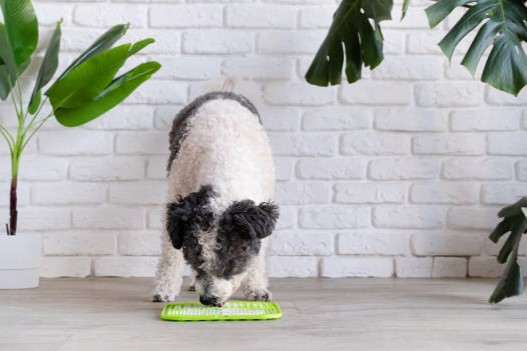
In contrast, flexible silicone provides a soft, non-abrasive surface that protects a pet’s sensitive nose and tongue during feeding. This flexible material allows for intricate, high-density maze patterns that trap wet food spreads, encouraging soothing licking behaviors.
4. Strategic Sourcing Guide: Matching Materials to Product Lines
Do not select your product materials based on current social media trends or cheap compound pricing alone. Instead, evaluate your specific tool configurations and target pet sizes by following this clear engineering checklist:
Evaluate Target Pet Size ──> Check Food Type Trait ──> Select the Optimal Production Material
-
The Deep Bowl Blueprint: Select solid PP injection molds if your product line focuses on deep bowls for dry kibble.
-
The Licking Mat Blueprint: Choose liquid silicone rubber tools if you are designing flat, flexible mats for sticky purees.
-
The Budget Constraint: Use food-grade PP to minimize upfront mold tooling capitalization costs and speed up assembly lines.
-
The Premium Value Angle: Opt for durable, dishwasher-safe silicone to target premium, eco-conscious retail buyers.
Conclusion: Secure Your Pet Care Sourcing Pipeline
Building a highly profitable pet brand requires utilizing safe, certified materials that pass global customs checks while satisfying retail buyers.
Stop risking your global brand equity on low-grade, uncertified plastics that leach toxins and fail regulatory compliance audits. Upgrading your custom product catalog to our advanced, food-safe pet slow feeder configurations ensures absolute chemical safety and flawless structural performance. We engineer every injection mold block to maximize automated production speeds and maintain ultra-tight manufacturing tolerances.
Contact the WIN WIN technical sales team today to review your part designs and secure your next high-volume wholesale production run.





Add comment