

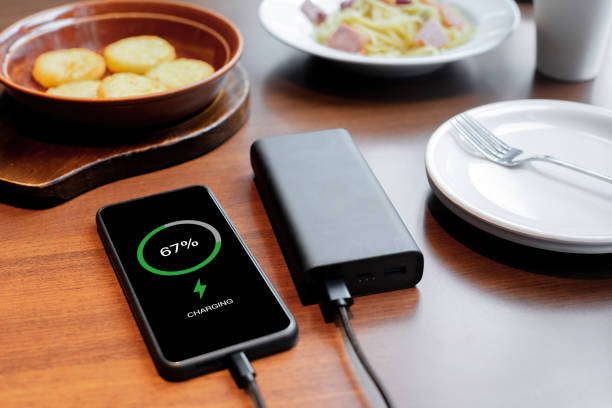
Flame Retardant PC/ABS for Power Bank Enclosure Injection Molding
For portable power banks and lithium-battery electronics, enclosure material selection directly affects fire safety, mechanical protection, and regulatory compliance. As safety requirements become more demanding, manufacturers can no longer evaluate plastic housings only by appearance, cost, or structural strength.
For power bank enclosure injection molding, flame-retardant PC/ABS has become an important material option because it combines impact resistance with improved resistance to ignition and flame propagation. For products targeting strict safety requirements, engineers must also control the molding process carefully to preserve the resin’s certified flame-retardant performance.
1. Why Material Selection Matters for Power Bank Enclosures
A lithium-battery enclosure must provide more than mechanical protection. During an internal short circuit, overload, or other thermal event, the housing should help limit flame propagation and prevent the enclosure itself from becoming an ignition source.
This makes the difference between standard ABS and flame-retardant PC/ABS particularly important.
| Material / Parameter | Standard ABS | Standard PC/ABS | Flame-Retardant PC/ABS |
|---|---|---|---|
| UL94 Flammability Class | HB | V-2 to V-1 | V-0 |
| Glow-Wire Performance | ≤650°C | 750°C–800°C | ≥900°C |
| Impact Resistance | Moderate | High | High |
| Structural Rigidity | Moderate | High | High |
| Thermal Deformation | Approx. 80°C–85°C | Approx. 95°C–100°C | Approx. 110°C–120°C |
| Application Focus | General plastic housings | Electronics housings | Safety-focused battery enclosures |
The exact certification requirement depends on the finished product, applicable market, and certification scheme. However, selecting a resin with the required flammability rating at the material stage simplifies subsequent compliance evaluation.
2. UL94 V-0 and Glow-Wire Performance
UL94 V-0 Flame Resistance
UL94 evaluates the burning behavior of plastic materials under controlled laboratory conditions. Under the V-0 classification, the material must extinguish rapidly after flame exposure and must not produce flaming drips that ignite the indicator material below the specimen.
The original technical target for high-safety power bank housings is therefore UL94 V-0, rather than relying on general-purpose ABS.
This distinction becomes particularly important when the enclosure contains lithium batteries and electronic circuits that can generate significant localized heat.
Glow-Wire Testing up to 900°C
Glow-wire testing evaluates the material’s response to intense localized heat. The test simulates thermal stress that can occur when an electrical component overheats or develops a fault.
For the material specification described in this application, the target can reach 900°C. The enclosure material must resist ignition or sustained combustion under the defined test conditions.
Therefore, engineers should evaluate both UL94 flammability classification and glow-wire performance rather than treating flame resistance as a single material property.
3. Injection Molding Requirements for Flame-Retardant PC/ABS
Selecting certified flame-retardant PC/ABS does not automatically guarantee that the finished enclosure will retain the expected performance.
PC/ABS is sensitive to moisture and excessive thermal exposure. Flame-retardant additives can also degrade when processors exceed the recommended temperature or residence-time window.
3.1 Moisture Control Before Molding
PC/ABS is hygroscopic, so moisture must be controlled before injection molding.
The specified processing approach uses desiccant drying at:
- Drying temperature: 100°C–110°C
- Drying time: 3–4 hours
- Target moisture content: below 0.02%
Insufficient drying can contribute to hydrolytic degradation, surface defects, and reduced material performance during injection molding.
3.2 Melt Temperature and Residence Time
FR-PC/ABS requires controlled melt processing.
The specified processing window is:
- Melt temperature: 240°C–270°C
- Upper warning point: above 280°C
- Recommended residence time: no more than 6–8 minutes at elevated processing temperatures
Excessive thermal exposure can degrade the flame-retardant additive system. It may also produce molding defects such as silver streaks and gas marks.
For this reason, barrel temperature, screw speed, shot size, and material residence time should be evaluated together rather than controlling melt temperature alone.
3.3 Mold Venting and Runner Design
Proper mold venting is another important factor in power bank enclosure injection molding.
During high-speed filling, trapped air and process gases can accumulate around weld lines, ribs, and the end of the filling path. Poor ventilation can result in burn marks, surface defects, or inconsistent filling.
The specified venting design uses:
0.02 mm–0.04 mm vent depth
Vents should be positioned strategically around the end-of-fill areas and rib intersections to release trapped gases while minimizing flash.
4. Material Selection and Process Control Work Together
The fire-safety performance of a molded power bank enclosure depends on both the resin specification and the manufacturing process.
A simplified production control path is:
Certified FR-PC/ABS Resin → Moisture Control → Controlled Melt Processing → Proper Mold Venting → Injection Molding → Flammability & Quality Verification
This means procurement teams should not evaluate resin certificates independently from the injection molding process.
A certified UL94 V-0 resin can still produce inconsistent molded parts if the material absorbs excessive moisture, remains in the barrel too long, or experiences excessive thermal exposure during processing.
5. Key Parameters for Power Bank Enclosure Injection Molding
For engineering and procurement reviews, the main parameters can be summarized as follows:
| Technical Parameter | Target / Reference |
|---|---|
| Flame-Retardant Material | FR PC/ABS |
| UL94 Rating | V-0 |
| Glow-Wire Performance | Up to 900°C |
| Pre-Drying Temperature | 100°C–110°C |
| Pre-Drying Time | 3–4 hours |
| Target Moisture | <0.02% |
| Melt Temperature | 240°C–270°C |
| Recommended Residence Time | ≤6–8 minutes |
| Mold Vent Depth | 0.02–0.04 mm |
| Aluminum / Other Structural Requirements | According to final enclosure design |
These values should be treated as the processing targets specified for this material and application. Final molding parameters should always be confirmed against the selected resin supplier’s technical datasheet and the actual mold design.
6. What Engineers Should Verify Before Mass Production
Before moving a new power bank enclosure into volume production, engineering and procurement teams should verify four areas:
- Material certification
Confirm the selected PC/ABS grade has the required UL94 and thermal performance documentation. - Material preparation
Verify drying temperature, drying time, and moisture content before molding. - Injection process stability
Monitor melt temperature, residence time, injection conditions, and material degradation risks. - Mold design and finished-part testing
Check venting, weld-line quality, dimensional consistency, appearance, and applicable fire-safety requirements.
This approach connects material compliance with actual molded-part performance rather than treating certification as a raw-material-only issue.
Technical Summary
For power bank enclosure injection molding, flame-retardant PC/ABS provides a combination of impact resistance, structural rigidity, and improved fire performance. The specified target of UL94 V-0 and glow-wire performance up to 900°C addresses demanding thermal safety requirements for non-metallic battery housings.
However, material selection represents only the first step. Maintaining performance during production requires 100°C–110°C desiccant drying, moisture below 0.02%, a 240°C–270°C melt-temperature window, controlled residence time, and 0.02–0.04 mm mold venting.
For B2B electronics manufacturers, evaluating these material and processing parameters together provides a more reliable basis for developing compliant, repeatable, and production-ready power bank enclosures.




Add comment