

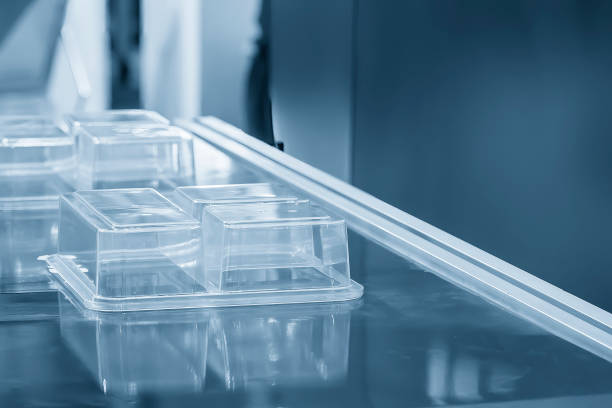
A flat cover might look simple on paper, but it is one of the most challenging geometries to manufacture perfectly. Large surface areas are highly prone to warping as the plastic cools and shrinks. Consequently, a part that should be flat often ends up curved like a potato chip, leading to assembly failures and poor aesthetics. Achieving a custom plastic injection molding result requires a strategic combination of structural reinforcement and flow management. This guide explores how to keep your covers flat by optimizing rib layouts and gate placement.
1. Strengthening the Flat: Strategic Rib Layouts
A flat, thick cover lacks the structural “rigidity” to resist internal cooling stresses. Consequently, the material pulls inward during solidification, causing the edges to curl. To solve this, engineers add internal ribs that act like the steel beams of a building.
-
Grid Patterns (Hash Layout): Creating a “well-shaped” grid provides multi-directional strength. This is the most effective way to counteract shrinkage across a large surface area.
-
Radial Patterns (Star Layout): For circular covers, ribs radiating from the center help distribute stress evenly toward the outer rim.
-
The 60% Rule: To avoid “sink marks” on the top surface, rib thickness should stay below 60% of the main wall thickness.
Consequently, a well-designed rib structure keeps the part straight without adding excessive weight. Furthermore, these ribs improve the overall impact resistance of the final product. Therefore, the right layout ensures your custom plastic injection molding project meets professional flatness standards.
2. Controlling Stress: Gate Position and Flow Balance
The point where molten plastic enters the mold—the gate—dictates how the part fills and cools. If you use a single gate for a large cover, the plastic at the end of the flow path cools more slowly than the plastic at the entrance. Consequently, uneven cooling rates create “internal stress” that forces the part to warp once it leaves the mold.
-
Multi-Point Injection: Using multiple gates allows the mold to fill faster and more uniformly. This balances the pressure inside the cavity and reduces the distance the plastic must travel.
-
Center Gating: For symmetrical covers, placing the gate in the center ensures that the material flows outward at an equal rate in all directions.
-
Gate Relocation: Moving the gate away from thin sections prevents premature freezing and “packing” issues.
Consequently, optimized gating keeps the internal molecular structure stable. Furthermore, it allows you to maintain a warpage tolerance within a strict ±0.5mm range. Therefore, gate optimization is a critical step in professional mold flow analysis.
3. Warpage Control Comparison
| Design Element | Standard Flat Cover | Optimized Custom Plastic Injection Molding |
| Rib Structure | None or Minimal | Grid / Radial Reinforcement |
| Gating Method | Single Side Gate | Balanced Multi-Point / Center Gate |
| Cooling Uniformity | Poor (High Internal Stress) | High (Balanced Cooling) |
| Flatness Results | Warping > 1.5mm | Tight Tolerance < ±0.5mm |
Conclusion: Achieving the Perfect Flat Finish
Success in molding flat parts depends on mastering the invisible forces of thermal shrinkage.
Stop struggling with “twisted” covers and expensive assembly misfits in your production line. Instead, embrace the precision of professional custom plastic injection molding techniques that prioritize structural and flow balance. Consequently, your covers will remain perfectly flat and fit seamlessly every time. Experience the difference that expert mold design and gate optimization bring to your brand today. Your products deserve a finish that stays true to your original vision.



Add comment