

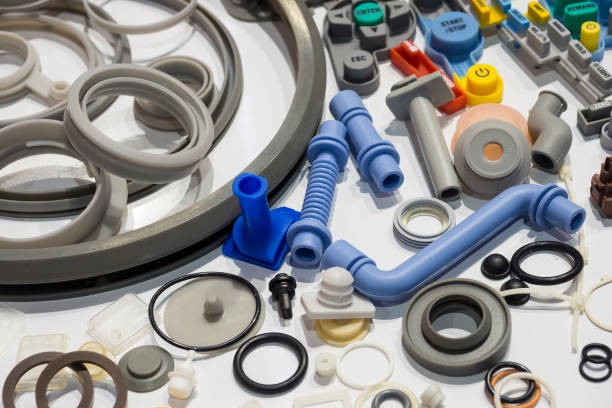
Manufacturing high-precision silicone parts requires absolute control over air and pressure. Standard molding often faces challenges like trapped air or incomplete filling. However, vacuum-assisted technology offers a professional solution to these persistent quality issues. It ensures that every intricate detail of the mold receives the liquid material. This guide explores how vacuum systems eliminate defects in silicone injection molding. We help you achieve perfect results for your most complex product designs.
1. Hidden Challenges in Molding: How Trapped Air Impacts Product Quality
In silicone injection molding, unseen factors often determine the final product quality. Among them, trapped air inside a closed mold acts as a critical barrier, directly interfering with material flow and overall part integrity. Therefore, understanding and controlling air behavior is essential for achieving consistent, high-quality results.
Understanding Air Traps and Bubble Formation
During high-speed injection, air frequently becomes trapped in corners, narrow channels, or deep cavity sections. As a result, these air pockets block the silicone from fully contacting the mold surface. At the same time, intense injection pressure compresses the trapped air, which can lead to localized overheating or even burn marks. Consequently, the final product may show visible bubbles, surface blemishes, or structural inconsistencies. For this reason, manufacturers must actively manage air evacuation to ensure smooth material flow and flawless surface finishes.
Overcoming the Problem of Short Shots
In addition to surface defects, trapped air can also cause incomplete mold filling, commonly known as a “short shot.” This issue occurs when the material fails to reach every part of the mold cavity, leaving missing edges or partially formed features. It becomes especially problematic in thin-wall designs, where flow resistance is naturally higher. Furthermore, trapped air generates back pressure that directly opposes the injection force, making it even harder for the silicone to advance.
Therefore, by effectively removing internal air and optimizing venting strategies, manufacturers enable the silicone to flow freely, ensuring complete filling, precise detailing, and consistent product quality.
2. Vacuum-Assisted Molding: Creating the Ideal Environment for Precision
Achieving flawless silicone parts begins with controlling what you don’t see—air and moisture inside the mold cavity. Instead of allowing trapped gases to compromise quality, vacuum-assisted molding actively clears the path for perfect material flow and superior results.
The -0.1MPa Vacuum Extraction Process
First, the system securely closes the mold and immediately activates a dedicated vacuum pump. Within seconds—before injection even begins—it reduces the internal pressure to approximately -0.1MPa. As a result, the process effectively removes nearly all oxygen and moisture from the cavity. With this clean, controlled environment in place, the liquid silicone enters a fully receptive space, allowing it to flow smoothly and fill every detail with precision.
Why It Excels in Complex Structures
Moreover, vacuum assistance plays a critical role when producing parts with deep cavities or intricate, branching geometries. By eliminating air resistance, it allows the silicone to flow effortlessly into thin ribs and fine features. In addition, it significantly reduces the need for excessive venting channels on the mold surface. Consequently, manufacturers minimize flash and material waste while achieving cleaner edges and sharper definitions. Ultimately, this leads to higher dimensional accuracy and consistently superior part quality.
3. Unlocking Greater Efficiency in High-Precision Manufacturing
In high-precision production, every detail directly impacts cost, quality, and long-term reliability. By integrating vacuum technology into your molding process, you actively transform both the economics and performance of your operations.
To begin with, vacuum-assisted molding significantly reduces defects. By eliminating trapped air, you virtually remove issues such as bubbles and voids, which in turn lowers reject rates and minimizes material waste. At the same time, the process enables faster and more efficient mold filling. Because it requires lower injection pressure, you can accelerate cycle times while maintaining precise control over complex geometries.
Moreover, vacuum technology enhances the final product’s appearance. It allows you to achieve flawless surface finishes—whether mirror-like or textured—without flow marks or interruptions. As a result, you maintain superior consistency across extended production runs, even in demanding manufacturing environments.
In addition, silicone injection molding with vacuum support has become the industry benchmark for medical-grade components, where precision and reliability are non-negotiable. Beyond product quality, this approach also protects your tooling investment. By reducing air burning and oxidative damage, it extends the lifespan of expensive steel molds.
Ultimately, by adopting vacuum-assisted molding, you not only improve product consistency but also reduce operational costs—saving on both material waste and long-term tool maintenance.
Conclusion: Precision Filling for Every Geometry
Achieving perfection in silicone manufacturing requires the right technological foundation.
Stop struggling with air-related defects that compromise your product’s integrity. Instead, embrace the power of vacuum-assisted silicone injection molding for your next project. Consequently, your parts will be stronger, clearer, and more precise than ever. Experience the confidence of zero-bubble production with professional-grade molding solutions. Start your journey toward flawless silicone components today. Your designs deserve a manufacturing process that leaves no room for air.




Add comment