

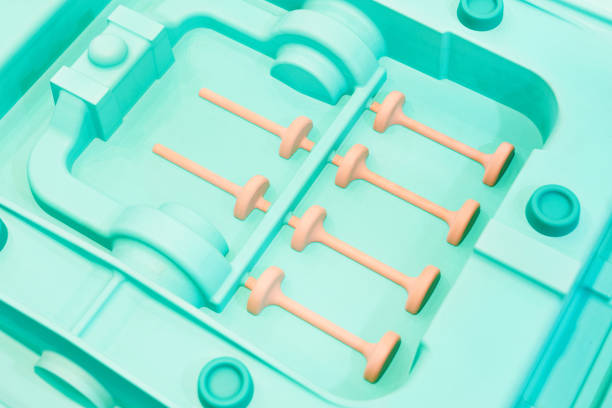
Product design managers, kitchenware distributors, and consumer brand wholesalers face a crucial technical decision when planning high-volume custom manufacturing runs. When bringing a new protective hot pad or trivet to market, procurement teams frequently encounter two competing rubber processing methods. Specifically, corporate buyers ask: “When designing a custom silicone insulation mat, should we invest in advanced liquid silicone rubber injection molding, or choose traditional solid compression tooling? Furthermore, how do these options alter our minimum order quantities (MOQs) and total production costs?”
Selecting the correct production process directly impacts your upfront capital requirements, per-unit margins, and the overall look and feel of your product. Choosing a premium liquid silicone injection molding setup delivers unmatched part consistency and flawless surfaces for high-end consumer markets. This technical sourcing guide details the engineering trade-offs, financial balances, and quality differences between these two manufacturing methods.
1. The Technical Breakdown: How Both Processes Handle Silicone Rubber
To make an informed sourcing choice, your engineering group must first examine how these two manufacturing techniques shape raw elastomer compounds.
 Solid Compression Path: [Manual Rubber Placement] ──> Heated Compression Mold ──> ❌ Rough Flash/Manual Trimming
 LSR Injection Path:     [Automated Closed Feed]   ──> High-Precision LSR Mold ──> ♻️ Flawless Flashless Parts
Solid Silicone Compression Molding
Traditional compression molding utilizing Solid Silicone Rubber (HCR) represents a straightforward, long-standing manufacturing method. Factory operators manually place pre-measured blocks of unvulcanized silicone rubber directly into a heated open mold cavity. Next, a heavy hydraulic press closes the mold plates under intense mechanical pressure, forcing the rubber to flow across the tool geometry. While this approach keeps initial mold costs low, it requires intensive manual labor and leaves a thick ring of leftover rubber scrap (flash) around the part edges that requires manual trimming.
Liquid Silicone Rubber (LSR) Injection Molding
Conversely, a premium liquid silicone injection molding platform operates a fully automated, closed-loop system. Advanced dosing pumps feed dual-component liquid raw materials directly into a cooled mixing chamber before injecting the compound into high-precision, heated mold cavities. Because the liquid silicone fills complex micro-textures instantly under precise computer control, this process accommodates complex geometric patterns and ultra-thin walls seamlessly. The parts release from the mold completely clean, eliminating the need for manual deflashing or secondary finishing work.
2. The Three-Dimensional Selection Matrix: Costs, Volumes, and Timelines
Sourcing managers must analyze upfront tooling expenses alongside long-term component volumes to calculate the most profitable manufacturing route.
Tooling Cost vs. Piece Price Scaling:
Solid Compression: Low upfront tool costs, but high manual labor.
Premium LSR Injection: High tool investment, but lowest unit cost.
When comparing these two methods, your procurement team should evaluate three primary operational dimensions:
-
Product Geometric Complexity: Compression molding excels at producing thick-walled, basic industrial mats or simple geometric profiles. However, if your custom product features delicate lace textures, thin honeycomb cells, or overmolded plastic frames, high-precision liquid injection becomes an absolute necessity.
-
Upfront Tooling Investment and MOQs: Solid compression molds utilize simpler steel plates, allowing factories to accept low initial tooling budgets and flexible, low MOQs. Conversely, liquid injection molds require specialized cold-runner valve systems and tighter sealing channels, which demand a higher initial tooling investment and larger minimum production volumes.
-
Per-Unit Production Cost Scaling: Although solid molding seems cheaper for small test batches, its high manual labor requirements keep per-piece prices high as order sizes grow. Liquid silicone injection molding reverses this trend completely; its high-speed automated cycle times cause your individual piece costs to drop significantly as your order volume increases.
Silicone Production Process Comparison
| Critical Procurement Metric | Solid Silicone Compression Molding | Liquid Silicone Injection Molding |
| Material Base Form | High Consistency Rubber (HCR) solid blocks | Dual-component raw liquid polymer (LSR) |
| Part Wall Uniformity | Fair; prone to shifting during compression | Perfect; controlled liquid injection filling |
| Edge Flash Consistency | High; requires manual blade trimming | Flashless; automated clean parting lines |
| Upfront Mold Budget | Low; cost-effective for initial prototyping | Higher demands for precision steel tooling |
| Optimal Order Volume | Small test batches and low-volume orders | High-volume commercial product rollouts |
| Standard Tooling Lead Time | Fast (7 to 15 business days) | Comprehensive (15 to 25 business days) |
3. Material Integrity and Thermal Performance Thresholds
Whether you choose solid or liquid molding, your finished product must satisfy strict international consumer safety and thermal performance requirements.
Premium Pure Compound ──> Resists -40°C to 230°C Cycles ──> Retains Shape & Color ──> ♻️ Safe Food-Grade Certification
High-end consumer-grade insulation mats must withstand continuous temperature cycles ranging from a freezing -40℃ up to a scorching 230℃ without releasing fumes, losing shape, or leaching chemicals into hot cookware. For premium baby care or gourmet kitchenware lines, your supplier must formulate the silicone compound to pass strict FDA 21 CFR 177.2600 or European LFGB extraction tests.
Furthermore, if your project demands advanced thermal protection for sensitive industrial electronics, engineers can add aerogel-infused additives into the liquid silicone stream. This specialized formulation significantly boosts the material’s thermal resistance, keeping the outer surfaces cool even under extreme heat stress.
Conclusion: Choose the Right Manufacturing Partner for Your Brand
In conclusion, scaling a successful international retail product line requires matching your product’s design specifications with the right manufacturing process.
If you are launching a low-volume test batch or prototyping thick industrial pads, starting with solid compression tooling is often the most sensible choice. However, for high-volume consumer kitchenware brands that demand perfect dimensional consistency, crisp texture lines, and smooth, flash-free edges, investing in a high-capacity liquid silicone injection molding setup is the ultimate path to success. We engineer every custom mold and calibrate every automated injection cycle to ensure your products pass international food safety inspections cleanly.




Add comment