

When designing plastic parts, features such as side holes, clips, threads, and snap fits often create a common question:
“Why does my injection molding supplier need to add sliders, and will this significantly increase mold cost?”
These features are known as injection molding undercuts. Because they cannot be released directly through normal mold opening, additional mechanisms such as side cores or slider systems are often required.
Understanding how undercuts affect mold complexity design helps product developers balance functional requirements, tooling investment, and manufacturing efficiency.
What Are Injection Molding Undercuts?
Why Can Normal Mold Opening Not Release Undercut Features?
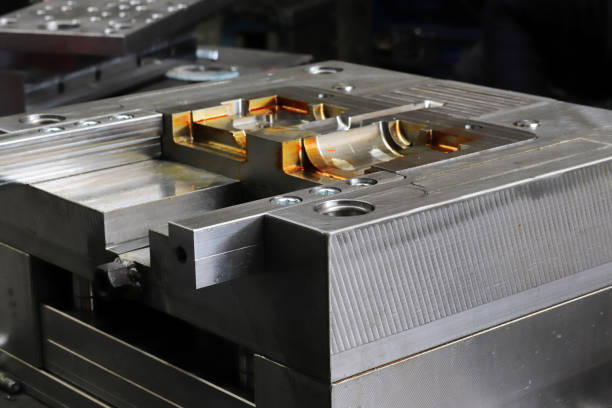
In injection molding, the mold usually opens in a straight direction. The core and cavity separate, allowing the molded part to be ejected.
However, some product features block this movement.
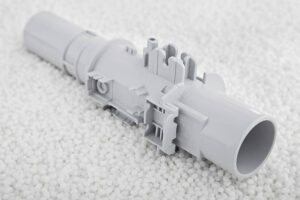
Common undercut examples include:
- Side holes
- Internal hooks
- Snap-fit structures
- Side grooves
- External threads
- Locking clips
These features prevent the part from being removed directly from the mold.
To solve this problem, manufacturers introduce additional mold movements to release these areas before ejection.
How Does a Side Core or Slider Mechanism Work?
Why Are Side-Action Cams Used in Injection Molds?
A side-action cam or slider mechanism allows the mold to create and release features located perpendicular to the main opening direction.
The process usually includes:
- Mold closes and the slider moves into position.
- Plastic material fills the cavity around the slider.
- Cooling completes the part shape.
- During mold opening, the cam mechanism pulls the slider away.
- The molded part is ejected without damage.
This mechanism enables complex geometries that cannot be achieved with a standard two-plate mold.
How Much Do Side Actions Increase Mold Cost?
What Makes Side-Action Cams More Expensive?
The addition of sliders increases tooling cost because the mold requires more precision components.
Additional costs usually come from:
1. More Complex Machining
Side-action systems require:
- Additional steel components
- Precision guide systems
- Extra machining processes
- More assembly time
Compared with a simple mold structure, the manufacturing process becomes more complicated.
2. Higher Material Requirements
Because sliders experience repeated movement and friction, mold components often require:
- Higher-quality tool steel
- Improved surface treatment
- Better wear resistance
These requirements increase material and processing costs.
3. More Complex Mold Maintenance
A mold with side actions includes more moving components.
Maintenance considerations include:
- Slider lubrication
- Wear inspection
- Alignment checks
- Replacement of moving parts
Therefore, more complex molds may require additional maintenance planning.
What Factors Determine Side-Action Cam Cost?
How Does Mold Complexity Affect Injection Mold Pricing?
The cost impact depends on several factors:
| Cost Factor | Influence on Tooling |
|---|---|
| Number of sliders | More mechanisms increase machining and assembly work |
| Slider size | Larger movements require stronger components |
| Part geometry | Complex undercuts require more precise design |
| Mold material | Higher-grade steel increases cost |
| Production volume | Higher volumes may justify advanced tooling |
A simple side hole may require a small slider, while complex internal locking structures may require multiple actions.
Can Product Design Reduce Mold Complexity?
How Does Design Optimization Lower Tooling Cost?
Not every undercut requires a slider.
During the design stage, engineers can often modify part geometry to simplify molding.
Possible optimization methods include:
Adjusting the Parting Line
Changing the mold separation direction may allow certain features to be molded directly.
This can eliminate additional side-action mechanisms.
Changing Feature Orientation
Some holes, ribs, and clips can be redesigned so they align with the mold opening direction.
This reduces mechanical complexity.
Using Mold Split Techniques
Certain structures can be created through:
- Core and cavity separation
- Sliding shut-off designs
- Split inserts
These methods may avoid traditional slider systems.
When Is a Slider Better Than Secondary Processing?
Should Manufacturers Use Side Actions or Post-Machining?
For some products, manufacturers can avoid complex molds by adding secondary operations.
Examples include:
- Drilling side holes after molding
- Machining threads after molding
- Adding features during assembly
However, this approach has trade-offs.
| Method | Advantages | Considerations |
|---|---|---|
| Side-action molding | One-step production, consistent positioning | Higher mold cost |
| Secondary machining | Lower initial tooling complexity | Additional labor and processing time |
| Design modification | Reduces long-term cost | Requires product changes |
The best solution depends on:
- Production quantity
- Part accuracy requirements
- Manufacturing cycle time
- Overall project budget
How Should Engineers Evaluate Undercut Features Before Tooling?
Injection Molding Design Optimization Checklist
Before finalizing a mold design, engineers should review:
| Evaluation Item | Key Question |
|---|---|
| Feature direction | Can the feature release with normal mold opening? |
| Undercut necessity | Is the feature required for product function? |
| Alternative designs | Can geometry be modified to simplify molding? |
| Production volume | Does tooling investment match expected output? |
| Secondary operations | Is post-processing more economical? |
Early communication between product designers and mold engineers can prevent unnecessary tooling complexity.
Why Should Mold Engineers Join the Product Design Stage?
How Does Early DFM Review Reduce Costs?
Design for Manufacturing (DFM) analysis helps identify potential molding challenges before production begins.
A professional DFM review can evaluate:
- Undercut structures
- Draft angles
- Wall thickness
- Ejection methods
- Mold movement requirements
By solving these issues before mold fabrication, companies can reduce:
- Tool redesign costs
- Development delays
- Manufacturing risks
Balancing Function and Cost in Injection Mold Design
Injection molding undercuts are not necessarily a problem, but they require careful engineering decisions.
Side cores and slider mechanisms provide solutions for complex product features, but they also increase mold complexity and tooling investment. In some cases, redesigning the part structure or using secondary processing can achieve a better cost balance.
The key is not simply removing complex features, but evaluating whether each feature justifies the additional manufacturing requirement.
WIN WIN provides customized injection molding solutions, supporting product development through mold design optimization, DFM analysis, and efficient manufacturing strategies.




Add comment