

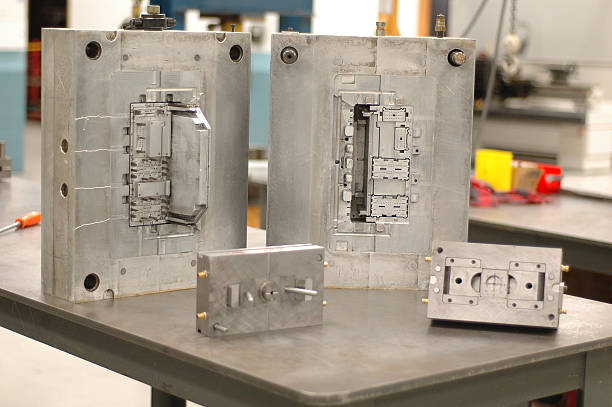
When evaluating custom tooling estimates, procurement managers, product designers, and supply chain executives frequently encounter a stark discrepancy: “Why do injection mold quotes for the exact same part design vary by 200% to 300% across different manufacturers?”
In high-precision manufacturing, a quote discrepancy rarely stems from raw profit margins alone. Instead, it reflects fundamental engineering choices regarding mold steel selection, cavitation strategy, heat treatment, side-action mechanisms, and internal cooling line architecture. A low upfront tooling cost often masks sub-standard tool steel, simplified cooling channels, and inadequate sliders—leading to higher scrap rates, frequent line shutdowns, and inflated per-unit production costs over time.
Understanding the engineering variables within an injection mold cost breakdown allows technical buyers to calculate true Total Cost of Ownership (TCO) and select the optimal tooling configuration for their production volume.
Injection Mold Cost Breakdown: What Determines Tooling Price and Lifespan?
Injection mold quotations can vary by two to three times for the same plastic part. The main reason is usually the difference in tooling design, material quality, production capacity, and expected mold lifespan.
A low-cost mold may reduce the initial tooling investment. However, cheaper steel, simplified cooling, and weaker structural components can increase maintenance and replacement costs later.
Therefore, buyers should evaluate the total tooling cost over the mold lifecycle, rather than comparing purchase prices alone.
1. Initial Mold Cost vs. Long-Term Tooling Value
The choice between budget tooling and production-grade tooling directly affects maintenance requirements and cost per molded part.
| Tooling Approach | Initial Cost | Maintenance Risk | Long-Term Cost per Part |
|---|---|---|---|
| Budget / Low-Grade Tooling | 50–60% lower | Higher wear and flash risk | Higher over short tool life |
| Precision Production Tooling | Higher initial investment | Lower with proper maintenance | Lower over high-volume production |
The Hidden Amortization Cost of Cheap Injection Molds
Low-cost tooling often reduces expenses through cheaper steel, simplified reinforcement, or less advanced cooling systems.
However, continuous injection molding can accelerate parting-line wear, core movement, surface pitting, and dimensional instability.
These problems become more serious when manufacturers process glass-filled or chemically aggressive engineering plastics.
As the mold wears, manufacturers may face additional repair costs, longer downtime, higher scrap rates, and inconsistent part dimensions.
Therefore, a lower purchase price does not always produce a lower overall tooling cost.
2. How Injection Mold Design Determines Tooling Cost
A detailed injection mold cost breakdown should consider several major engineering factors.
Mold Steel Grade and Expected Tool Life
Mold steel affects structural strength, corrosion resistance, surface finish, and expected shot count.
P20 Pre-Hardened Steel
P20 steel typically has a hardness of approximately 28–32 HRC.
It provides an economical solution for prototypes and low-volume production. Depending on the design and operating conditions, P20 tooling may support approximately 50,000–100,000 shots.
However, it may experience faster wear when processing abrasive or corrosive engineering materials.
S136 Stainless Tool Steel
S136 offers higher corrosion resistance and excellent polishing performance.
It is widely considered for medical components, optical parts, and high-gloss applications.
Properly designed and maintained S136 tooling can support hundreds of thousands of shots and, under suitable conditions, may reach 300,000–1,000,000 shots.
The actual service life depends on material selection, mold design, processing conditions, maintenance, and production requirements.
Cavitation and Production Efficiency
Cavity count directly affects both mold investment and production throughput.
Single-Cavity Mold
A 1×1 mold requires less machining and usually has a lower initial tooling cost.
It works well for low-volume production or large components.
However, the machine produces fewer parts during each molding cycle, which can increase the manufacturing cost per part.
Multi-Cavity Mold
1×4, 1×8, and 1×16 configurations increase tooling complexity and require careful runner and cooling balance.
However, they produce multiple parts during each cycle.
For high-volume production, higher cavitation can therefore reduce the tooling cost allocated to each part.
3. Mold Complexity, Side Actions, and Cooling Design
Part geometry also has a major influence on injection mold cost and manufacturing time.
Sliders, Lifters, and Side Cores
Undercuts and complex internal features often require additional mold mechanisms.
These may include:
- Mechanical sliders
- Side cores
- Hydraulic side actions
- Angle lifters
- EDM-machined components
Additional mechanisms increase machining requirements, assembly time, and maintenance complexity.
Complex production molds may therefore require several weeks for CNC machining, EDM, heat treatment, polishing, assembly, and testing.
Cooling Channel Design
Cooling system design directly affects molding cycle time and part dimensional stability.
Traditional straight-drilled cooling channels provide a cost-effective solution for many applications.
However, they may not provide uniform cooling around complex geometries.
Conformal cooling channels can follow the geometry of the molded component more closely.
When properly designed and validated through thermal analysis, conformal cooling may reduce cycle time and improve temperature uniformity.
The actual cycle-time improvement depends on the part geometry, resin, cooling design, and processing conditions.
4. Low-Cost Tooling vs. High-Precision Injection Molds
The following comparison highlights the typical differences between budget tooling and production-oriented mold construction.
| Technical Factor | Budget Tooling | High-Precision Production Tooling |
|---|---|---|
| Core & Cavity Steel | P20, NAK80, or lower-spec steel | S136, H13, 718H, or specified equivalents |
| Typical Tool Life | 50,000–100,000 shots | 300,000–1,000,000+ shots |
| Corrosion Resistance | Depends on steel grade | Higher with corrosion-resistant steels |
| Surface Finish | Standard finish | High-gloss or mirror polishing available |
| Cooling System | Basic drilled channels | Optimized or conformal cooling |
| Dimensional Stability | May decline as wear increases | Designed for repeatable production |
| Flash / Warpage Risk | Can increase with tool wear | Better controlled with optimized tooling |
| T1 Sample Lead Time | Often 15–20 days for simple molds | Often 30–45 days for complex production molds |
These figures represent typical engineering ranges rather than universal guarantees. Actual mold performance depends on the final tooling specification.
5. How to Evaluate an Injection Mold Quotation
A professional tooling quotation should contain more than a single total price.
Procurement teams should request detailed technical information before approving a mold supplier.
Verify the Mold Steel Specification
Ask suppliers to identify the exact core and cavity steel grade.
For premium tooling, request material certificates or mill certificates where applicable.
Avoid accepting vague descriptions such as “premium stainless steel” without a specific material designation.
Define the Guaranteed Tool Life
Specify the expected shot count in the tooling agreement.
For example, a production project may require a 300,000-shot tool life.
The agreement should also define which wear components the supplier will maintain or replace during the agreed warranty period.
Review Runner System Design
Confirm whether the quotation includes a cold runner or hot runner system.
Hot runner systems from established suppliers can increase the initial mold cost.
However, they can reduce runner waste and support more efficient production for suitable high-volume applications.
Request DFM and Moldflow Analysis
A comprehensive Design for Manufacturability review can identify potential production problems before mold construction begins.
Depending on the project, buyers can request:
- DFM analysis
- Moldflow simulation
- Filling analysis
- Cooling analysis
- Warpage prediction
- T1 dimensional inspection
- CMM measurement reports
These engineering services help reduce costly modifications after mold fabrication.
6. Questions to Ask Before Approving an Injection Mold
Before placing a tooling order, procurement teams should clarify the following points:
| Procurement Question | Why It Matters |
|---|---|
| What exact steel grade will you use? | Confirms material quality and expected durability |
| What shot count does the supplier guarantee? | Establishes expected tooling lifespan |
| How many cavities does the mold contain? | Determines production output per cycle |
| Does the mold use hot or cold runners? | Affects material waste and cycle efficiency |
| How is the mold cooled? | Influences cycle time and dimensional stability |
| Are sliders or lifters required? | Determines mechanical complexity |
| Is DFM included? | Helps identify manufacturability risks |
| Will the supplier provide T1 inspection data? | Supports dimensional approval before mass production |
| What maintenance is included? | Clarifies long-term tooling responsibilities |
Technical Summary
An injection mold cost breakdown should consider more than the initial tooling quotation.
Steel grade, cavity count, mold mechanisms, cooling design, runner configuration, and expected tool life can all affect the total cost of ownership.
Although budget tooling can reduce upfront investment, production-grade tooling can provide better durability and more consistent performance for high-volume manufacturing.
For demanding applications, optimized multi-cavity designs, suitable hardened steels, efficient cooling systems, and controlled mold maintenance can help reduce scrap, downtime, and long-term tooling costs.
WIN WIN provides custom injection molding, precision mold manufacturing, DFM engineering, and multi-cavity tooling solutions for OEM and high-volume production projects.


Add comment