

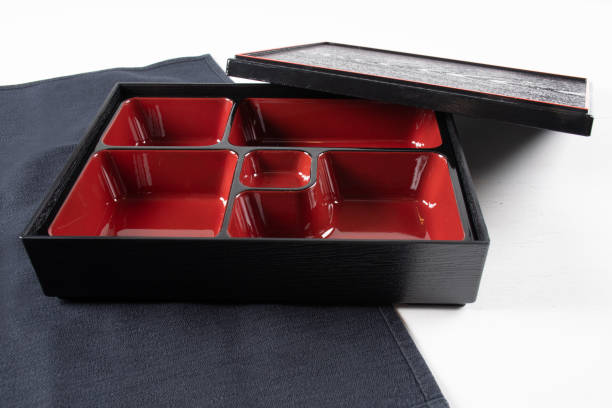
Commercial food service distributors and high-end restaurant chains demand exceptionally durable tableware for daily use. When sourcing premium presentation packaging, hospitality buyers heavily favor the classic, elegant look of Japanese-style containers. However, maintaining a striking contrast between the dark exterior and vibrant interior requires specialized manufacturing precision.
Building a high-quality dual-color melamine bento box requires mastering advanced thermal compression and polymer processing techniques. Standard single-color pressing methods cannot achieve a clean, sharp boundary line between two contrasting material tones. This technical manufacturing guide explores the precise two-shot molding process and the strict calibration methods required to guarantee total color consistency.
1. The Three-Step Two-Shot Production Workflow
Achieving a flawless dual-layer structure requires separating the material compression cycles into two distinct steps. Industrial factories utilize highly coordinated dual-station pressing systems to execute this complex workflow efficiently:
[Inject Inner Layer: Red] ──> [Transfer Semi-Finished Core] ──> [Inject Outer Layer: Black] ──> ♻️ Fusion Bond
-
Step 1: Fabricating the Internal Core: The production cycle begins by injecting the vibrant red melamine compound into the first precision mold core cavity. The machine applies high pressure to shape the internal lining section perfectly.
-
Step 2: Transferring the Preformed Core: The automated system lifts the warm, semi-finished red core out of the primary station. Then, the mechanical arm transfers the piece smoothly into the secondary outer mold housing.
-
Step 3: Compressing the External Shell: The secondary nozzle injects the deep black melamine compound over the preformed red core substrate layer. The intense heat fuses the two layers into one solid structural body.
2. Executing Complex Aesthetic Surface Enhancements
Advanced two-shot injection molding allows engineering teams to create beautiful decorative designs without using cheap surface paints.
                  Material Interlocking Design Dynamics:
   ┌──────────────────────────────────────────────────────────────────┐
   │ Inner Core Base: Features engineered micro-holes and slots.      │
   ├──────────────────────────────────────────────────────────────────┤
   │ Outer Shell Flow: Fluid black material flows into inner slots.   │
   └──────────────────────────────────────────────────────────────────┘
During the secondary molding cycle, the fluid black compound does not merely coat the exterior walls. Instead, the liquid material flows directly into pre-cut structural holes and slots molded into the red inner liner.
When the compound cures completely, these filled paths appear on the interior surface as beautiful, flush decorative patterns. This clever interlocking technique eliminates the risk of design peeling, ensuring the custom graphics easily survive thousands of commercial dishwashing cycles.
3. Critical Controls for Absolute Color Consistency
Maintaining a perfect color match across massive high-volume production runs represents the toughest challenge in black red bento box manufacturing. Even a tiny change in operational variables will alter the final shade of the plastic.
                  Four-Point Color Uniformity Controls:
 ┌──────────────────────────────────────────────────────────────────────┐
 │ 1. Synchronized Dual Molds: Eliminate thermal cooling delay times.   │
 │ 2. Exact Temperature Matching: Maintain identical heating setups.    │
 │ 3. Spectrophotometer Inspections: Scan raw powder material batches.  │
 │ 4. Proportional Pressure Control: Match fluid material flow rates.   │
 └──────────────────────────────────────────────────────────────────────┘
Synchronized Tooling Setup
Advanced dual-color melamine molding systems operate two distinct mold sets simultaneously to keep production moving smoothly. This rapid cycle prevents the semi-finished core from cooling down too much before the secondary compression step begins.
Identical Temperature Calibration
Engineers must maintain identical, highly stable temperatures across both tool sets during the entire run. If one mold experiences a temperature shift of just a few degrees, the raw pigments will cure unevenly, causing ugly surface clouding.
Raw Material Batch Validation
Quality control technicians utilize digital spectrophotometers to analyze every incoming batch of raw melamine powder. This rigorous screening process ensures that different material lots exhibit zero variance in base pigment density before production starts.
Proportional Injection Tuning
The dual-system machinery features independent, highly adjustable hydraulic pressure valves for each color circuit. Technicians tune these controls precisely to match the unique flow speeds and thickness requirements of different colored resins.
Conclusion: Invest in Flawless Commercial Tableware
Building a successful hospitality supply brand requires choosing premium tableware that can handle grueling restaurant environments while maintaining a beautiful aesthetic.
Stop wasting your procurement budget on cheap, painted containers that scratch easily and lose their color vibrancy after a few washings. Upgrading your inventory to our elegant dual-color melamine bento box configurations delivers superior impact resistance and absolute color uniformity across every single batch. We calibrate every dual-mold press to ensure a permanent bond and a beautiful finish.





Add comment